What is International Non-Binary People’s Day?
International Non-Binary People’s Day is observed worldwide every year on July 14. It celebrates people on the non-binary spectrum: whose gender identity does not fall within the traditional categories of male or female. This includes identities such as genderqueer, agender, bigender, genderfluid, demiboy, and demigirl. The day affirms that gender is not limited to two options, and that each person deserves the right to define themselves. It also calls attention to the barriers that non-binary people face in daily life, from misgendering to exclusion in official systems.
For many people, gender is an experience shaped by language, culture, and personal feeling. Non-binary people often move through a world that demands fixed categories in forms, language, and expectation. This can make even simple tasks, like applying for a passport or visiting a doctor, unnecessarily complicated or even harmful. International Non-Binary People’s Day gives voice to those experiences and opens space for public discussion about change. It is both personal and political, because identity is never separate from the systems that surround it.
The date of July 14 was chosen because it sits exactly between International Women’s Day and International Men’s Day. This symbolic placement emphasizes the existence and importance of people who live beyond or between those two categories. The day is not meant to oppose those identities, but to challenge the assumption that they are the only valid options. It is a reminder that identity cannot be confined to two boxes, and that recognition begins with listening.
See also LGBTQ+ Alphabet
History and Origin
International Non-Binary People’s Day was first observed in 2012. It was initiated by activists within the LGBTQ+ community who saw the need for a specific moment to recognize non-binary people. Although Pride Month offers visibility to many queer identities, non-binary experiences are often overlooked or misunderstood, even within inclusive spaces. This day was created to correct that gap and to center the voices of those who live outside traditional gender structures.
Gender diversity is not new, nor is it limited to the modern West. Many Indigenous cultures have long recognized identities that do not fit into a male-female binary. In parts of South Asia, the Pacific Islands, and the Americas, third gender roles have existed for centuries. Colonial systems, however, imposed strict gender binaries that erased these traditions. International Non-Binary People’s Day helps to reclaim those lost narratives and makes space for new expressions of self.
Since its beginning, the day has grown in scope and visibility. It is now marked by campaigns, events, art, activism, and education across the world. Social media has played a crucial role in spreading awareness, connecting communities, and challenging stereotypes. The day has also become a time for policy discussions, especially around identity documents, gender-inclusive language, and healthcare access. It continues to grow as more people speak openly about who they are.
Who participates in International Non-Binary People’s Day?
- Non-binary individuals: Use this day to express identity, share experiences, and connect with others.
- LGBTQ+ organizations: Promote inclusion, visibility, and rights for non-binary people through campaigns and events.
- Allies and families: Offer support by listening, learning, and speaking out against discrimination.
- Educators and institutions: Host talks, share resources, and adopt inclusive practices.
- Artists and creators: Use their platforms to reflect non-binary perspectives in film, literature, music, and visual art.
Slogans and Themes
The slogans and themes connected to this day often emphasize pride, self-definition, and resistance to erasure. Common phrases include “Beyond the Binary,” “You Are Valid,” and “There Is No One Way to Be.” These messages reject the idea that gender must follow rigid lines and invite people to think more openly about identity. Campaigns often focus on visibility and legal recognition, while also celebrating the creativity and resilience found in non-binary communities. The tone of the day balances joy with advocacy, reminding people that freedom to exist must be protected, not just acknowledged.
Colors, Symbols and Patterns
Colors
- Yellow: Represents those who live entirely outside the binary.
- White: Stands for people with multiple or fluid gender identities.
- Purple: Symbolizes the blending of male and female aspects.
Symbols
- Non-binary flag: Four horizontal stripes in yellow, white, purple, and black.
- Pronoun buttons: Promote respectful use of diverse pronouns.
- Open circles: Represent motion, growth, and refusal to be boxed in.
Patterns
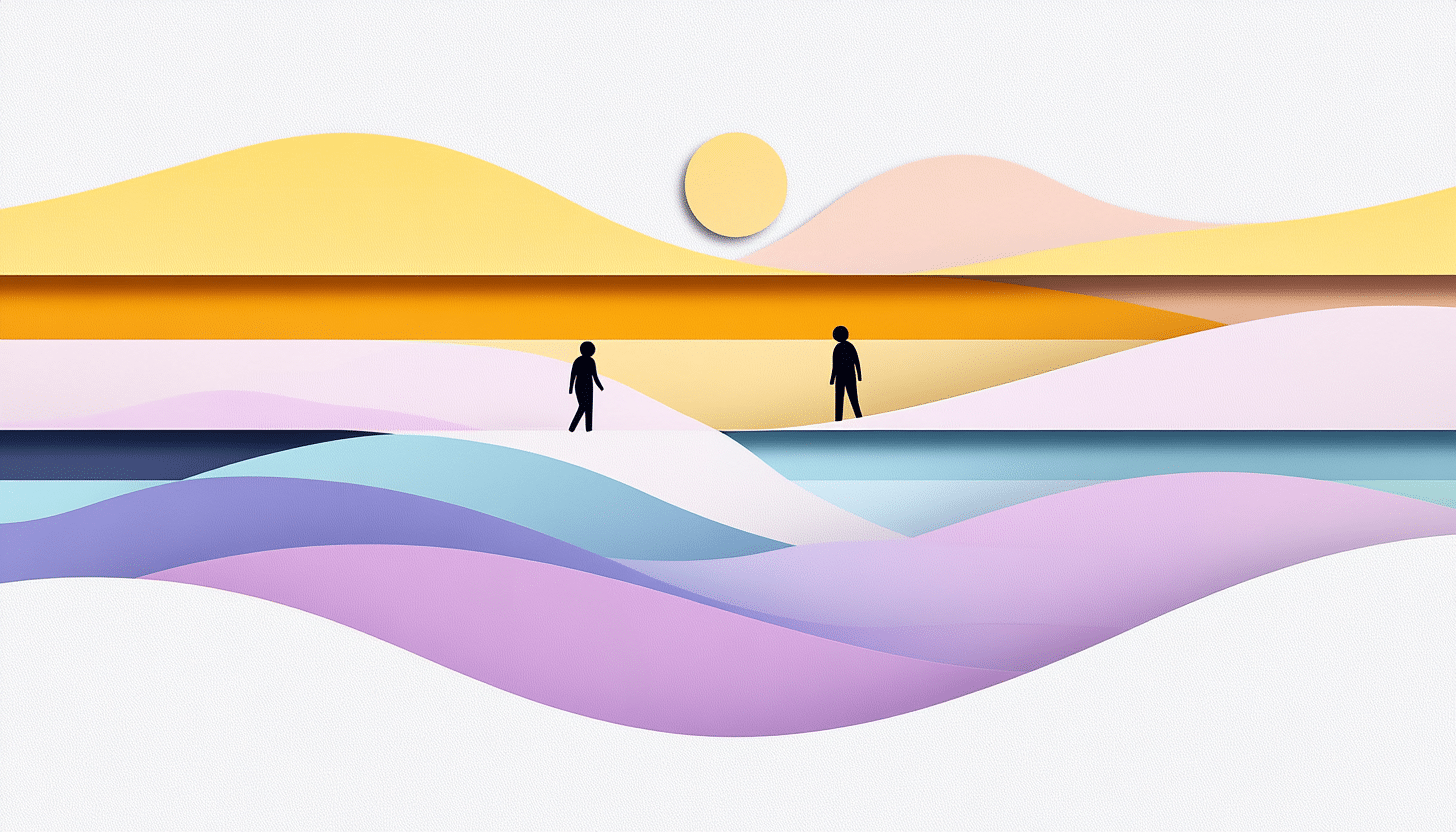
- Gradients: Suggest identity as a spectrum, not a fixed point.
- Asymmetry: Symbolizes diversity and resistance to uniformity.
- Overlapping shapes: Reflect the complexity and richness of gender experience.
Most used hashtags
- #nonbinary
- #enby
- #genderfluid
- #transrights
- #theythem
How do you celebrate International Non-Binary People’s Day?
- Organize events: Host panel discussions, workshops, or performances featuring non-binary voices.
- Share stories: Use social media to amplify non-binary perspectives or post your own journey.
- Support activists: Donate to organizations that fight for legal rights, healthcare, and protection.
- Wear the colors: Use yellow, white, purple, or black to show support and increase visibility.
- Review your language: Adopt gender-inclusive terms in your workplace, classroom, or daily life.
Why is International Non-Binary People’s Day important?
This day matters because many non-binary people still face exclusion, misunderstanding, and systemic erasure. Legal recognition is inconsistent or nonexistent in most countries. In places where gender markers on official documents must be either male or female, non-binary people are forced to choose between inaccuracy and invisibility. Healthcare systems, schools, and workplaces often operate with the same binary logic, making basic rights more difficult to access.
The current political climate makes this day even more urgent. In countries like the United States, new laws and policies are being introduced that actively deny the existence of non-binary and transgender people. These include restrictions on gender-affirming care, bans on inclusive education, and rollbacks of identity recognition. These developments are not abstract; they directly harm individuals and communities. Young people are particularly affected, often facing hostile school environments and limited mental health support.
International Non-Binary People’s Day pushes back against these threats by insisting on visibility, rights, and respect. It gives non-binary people a platform to speak, connect, and advocate. It also calls on allies to move beyond symbolic gestures and support tangible change. The day is not just about being seen;it is about being safe, respected, and free to exist without compromise.
Related articles
Features
July 14: Non-Binary People’s Day
Why do you keep falling for the same type?
Read the article Lovemaps: the hidden blueprint of our love.
Did you not find what you were looking for? Let me help you find more.