What is World Sjögren’s Day?
World Sjögren’s Day is observed every year on July 23 and is held worldwide. It brings attention to Sjögren’s syndrome, a chronic autoimmune disease where the body attacks its own moisture-producing glands. This leads to symptoms such as dry eyes, dry mouth, fatigue, and joint pain. In many cases, it also affects the kidneys, lungs, nervous system, and digestive organs. The goal of this day is to increase understanding, improve early diagnosis, and support those living with the condition.
The day is named in honor of Dr. Henrik Sjögren, the Swedish ophthalmologist who first described the disease. People around the world use the date to share stories, educate others, and demand better support for patients. Medical communities take the opportunity to highlight research and clinical guidelines. Awareness events focus on the fact that many patients wait years before receiving a proper diagnosis. World Sjögren’s Day gives visibility to a condition that is often hidden, yet deeply life-altering.
History and Origin
The observance of World Sjögren’s Day was established to honor the birthday of Dr. Henrik Sjögren, born on July 23, 1899. In the early 1930s, he studied a group of women who all experienced similar symptoms, including dry eyes and arthritis. His work led to the identification of a unique disease, which later took on his name. His research laid the foundation for understanding a complex illness that affects millions today. He helped connect seemingly unrelated symptoms into a broader autoimmune picture.
Over time, patient groups began using the date to promote global awareness. Medical organizations and charities joined efforts to push for earlier diagnosis, better treatments, and international guidelines. The day started to appear in autoimmune awareness campaigns and became a regular event on health calendars. Activities include conferences, online events, and public education efforts. The global medical community now treats World Sjögren’s Day as a key moment to focus on this often overlooked disease.
The day also highlights how little understood Sjögren’s syndrome still is. Many doctors are unfamiliar with its full range of effects, and misdiagnosis is common. For that reason, World Sjögren’s Day remains an important opportunity to push for better education among professionals. It also gives researchers a chance to present new findings and raise funds. For patients, the day provides a sense of solidarity and recognition that their struggle is not invisible.
Who Participates in World Sjögren’s Day?
- Patients and caregivers: People living with Sjögren’s syndrome and their families share their experiences to help others understand the condition.
- Medical professionals: Rheumatologists, dentists, and ophthalmologists join efforts to educate both patients and colleagues.
- Researchers: Scientists use the day to publish findings, discuss treatments, and highlight areas that still need attention.
- Health organizations: Charities and support groups host events, release resources, and run public campaigns.
- General public: Supporters wear awareness ribbons, share posts, and take part in local or online events.
Slogans and Themes
World Sjögren’s Day is often marked by themes of recognition, resilience, and medical progress. Slogans include “It’s not just dry eyes” and “Raising voices for Sjögren’s.” These phrases remind people that the disease goes far beyond what many assume. Each year, the day emphasizes a different angle, such as early diagnosis, invisible symptoms, or patient advocacy. Themes often reflect the lived reality of patients and the importance of listening to their voices.
Colors, Symbols and Patterns
Colors:
- Purple: The primary awareness color for Sjögren’s syndrome, representing strength and dignity.
- Teal: Often used to highlight the immune system and its complexity.
- White: Suggests the invisibility of symptoms and the need for clarity in diagnosis.
Symbols:
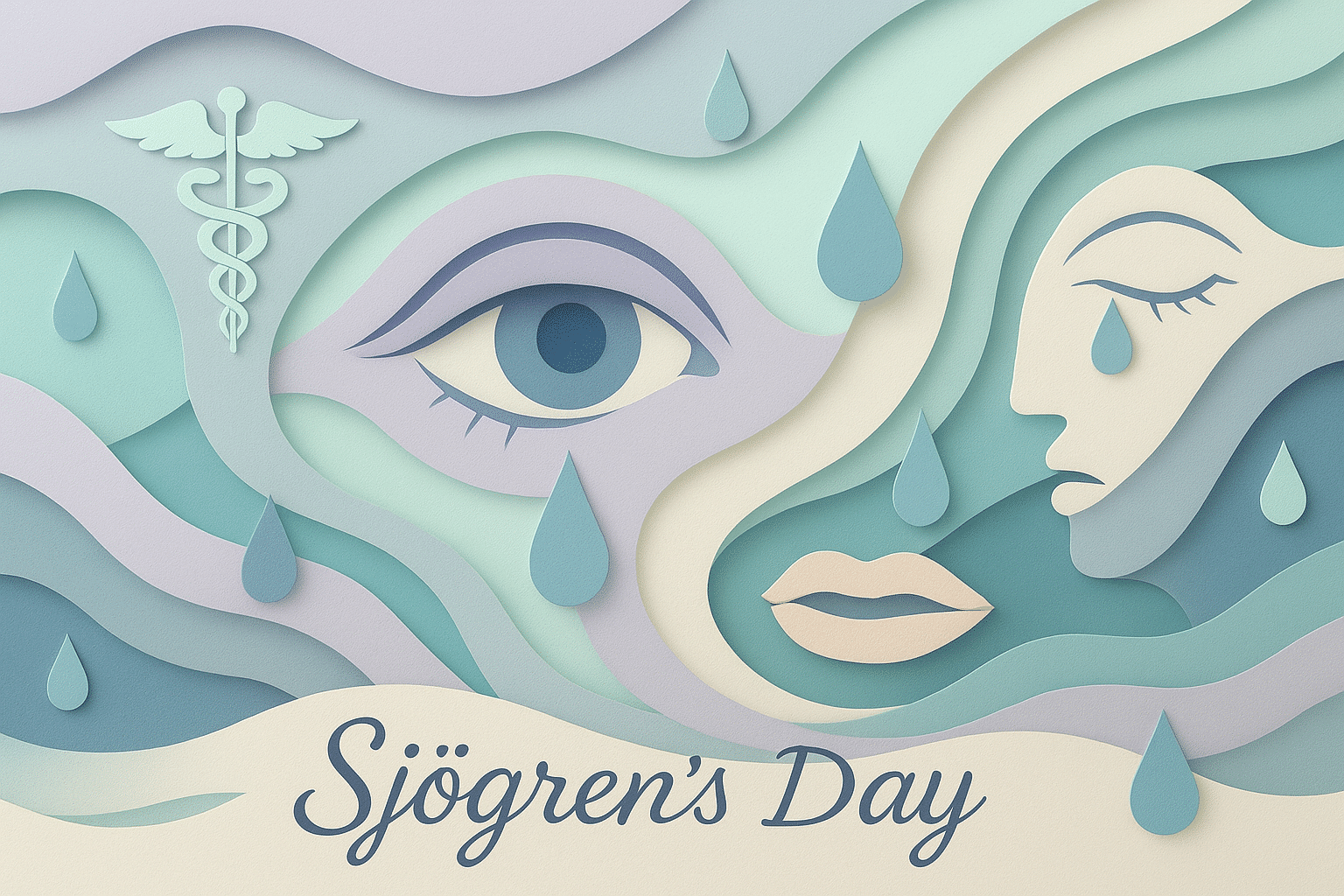
- Water droplet: Symbolizes the lack of moisture in eyes and mouth, a key feature of the condition.
- Eye and tear icon: Used to highlight ophthalmological symptoms and the original research by Dr. Sjögren.
- Awareness ribbon: Worn in purple or teal to support people living with the disease.
Patterns:
- Ripple designs: Suggest the spreading impact of symptoms throughout the body.
- Soft wave lines: Evoke dryness and flow, contrasting with the lack of moisture.
- Fragmented shapes: Represent the varied and unpredictable nature of autoimmune conditions.
Most Used Hashtags
- #worldsjogrensday
- #sjogrenssyndrome
- #autoimmunedisease
- #invisibleillness
- #dryeyedrymouth
How Do You Celebrate World Sjögren’s Day?
- Wear awareness colors: Dress in purple or teal and explain why to anyone who asks.
- Share your story: Use social media or support groups to talk about your journey and symptoms.
- Attend a webinar: Join an online event hosted by health organizations or clinics.
- Support a charity: Donate to a group working toward better research and patient care.
- Educate others: Share facts, videos, or leaflets to help friends and colleagues learn about the disease.
Why Is World Sjögren’s Day Important?
World Sjögren’s Day matters because it brings much-needed attention to a condition that is often ignored or misunderstood. The disease can severely impact quality of life, yet many people go years without a correct diagnosis. Raising awareness helps shorten that journey and opens the door to treatment and support. By telling real stories and sharing information, this day helps break down myths and misinformation. It gives patients a stronger voice and pushes medical systems to take the condition more seriously.
The day is also important for research. Scientists use the momentum to publish findings, announce trials, and connect with patient communities. Donations and media coverage help fund new studies. At the same time, patients get a chance to see that they are not alone. World Sjögren’s Day is a reminder that even quiet, invisible battles deserve attention. It is a day of solidarity, science, and hope for millions of people worldwide.
Features
July 23: Sjögren’s Day
Why do you keep falling for the same type?
Read the article Lovemaps: the hidden blueprint of our love.
Did you not find what you were looking for? Let me help you find more.