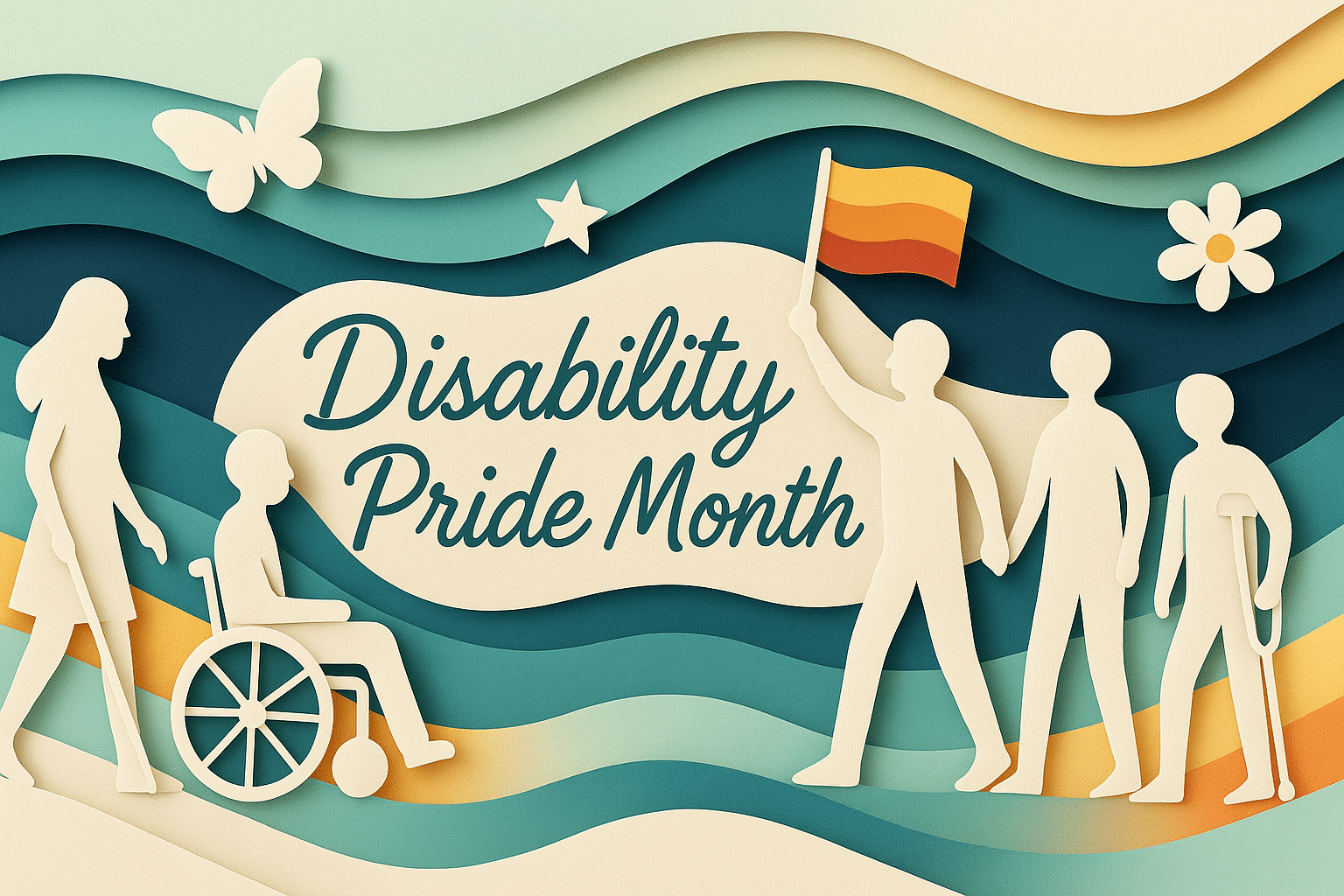
What is Disability Pride Month?
Disability Pride Month is held every July in the United States. This month honors the contributions, identity, and rights of disabled people. It highlights the importance of visibility and challenges negative stereotypes that have shaped public attitudes toward disability. Rather than focusing on pity or limitations, Disability Pride Month celebrates disability as a natural and valuable part of human diversity.
It is also a time to raise awareness about accessibility, equality, and the barriers that still exist. Schools and advocacy groups use the month to host events and campaigns. The aim is to shift the conversation from charity to justice and from inspiration to inclusion.
History and Origin
Disability Pride Month began in 1990, the same year the Americans with Disabilities Act (ADA) was signed into law. The ADA marked a turning point in the fight for equal rights, protecting disabled people from discrimination in many areas of public life. The first official Disability Pride Day was held in Boston in 1990. Over time, the idea grew into a full month of recognition and celebration in cities across the country. July was chosen to honor the passing of the ADA and its lasting impact.
The movement was inspired by other pride events, such as LGBTQ+ Pride Month, and was rooted in the belief that disability should not be hidden or apologized for. Disability pride challenges the idea that disabled people must “overcome” their bodies to be accepted. It embraces the idea that society must adapt and become more accessible, not the other way around.
Although Disability Pride Month is not yet a federally recognized observance, it has gained strong momentum in recent years. Cities like Chicago, New York, and San Francisco hold parades, panels, and festivals that center disabled voices. Social media plays a key role in connecting people across borders and backgrounds.
Who Participates in Disability Pride Month?
- Disabled individuals: People with visible and invisible disabilities lead conversations and events about identity and rights.
- Advocacy groups: Organizations working toward accessibility, legal reform, and social change highlight key issues.
- Allies and supporters: Friends, family members, and colleagues show solidarity by listening, learning, and sharing.
- Educators and students: Schools and universities explore disability history, culture, and inclusion in the classroom.
- Cultural institutions: Museums, libraries, and art centers host accessible programs that showcase disabled voices and stories.
Slogans and Themes
Slogans for Disability Pride Month include “Disabled and Proud,” “Access Is Freedom,” and “Nothing About Us Without Us.” The focus is on empowerment, dignity, and representation. Themes often explore identity, intersectionality, activism, and community care. Campaigns aim to normalize disability and challenge the social structures that limit access and equality.
Colors, Symbols and Patterns
Colors:
- Bright green: Symbolizes growth, vitality, and progress within the disability rights movement.
- Yellow: Represents energy, creativity, and visibility for those often left out of public narratives.
- Red: Stands for passion, activism, and the fight for justice.
Symbols:
- Disability Pride flag: A black background with zigzag stripes in five colors, each representing a different type of disability.
- Wheelchair icon: Used in a modern, active form to represent movement, access, and agency.
- Infinity symbol: Reflects neurodiversity, possibility, and the broad spectrum of disabled identities.
Patterns:
- Zigzag lines: Present on the Disability Pride flag, symbolizing the varied and complex experiences of disabled people.
- Layered textures: Reflect sensory experiences and the variety of perspectives within disability communities.
- High-contrast visuals: Used to ensure accessibility and symbolize clarity, focus, and directness.
Most Used Hashtags
- #DisabilityPrideMonth
- #DisabledAndProud
- #AccessibilityMatters
- #NothingAboutUsWithoutUs
- #InclusionNow
How to Celebrate Disability Pride Month
- Attend or organize a pride event: Look for parades, panels, or community gatherings that center disabled voices.
- Share your story: If you are disabled, talk about your experiences on your own terms. If you are an ally, amplify others respectfully.
- Educate yourself: Read books, watch documentaries, or follow creators who share knowledge about disability culture and rights.
- Advocate for access: Push for better accommodations in your school, workplace, or local community.
- Support disabled artists and creators: Buy from, share, or commission work by disabled people in your field of interest.
Why Is Disability Pride Month Important?
Disability Pride Month is important because it challenges shame, stigma, and exclusion. It replaces silence with conversation and isolation with visibility. For many people, it is the first time they see their experiences reflected and respected in public. Pride is not about ignoring difficulties but about refusing to be defined by them.
The month also pushes for structural change. Awareness alone is not enough. Real pride means better policies, more accessible spaces, and meaningful representation in culture, politics, and media. Disability Pride Month is not just a celebration, it is a movement for justice, rights, and recognition.
Features
July: Disability Pride Month (United States)
Why do you keep falling for the same type?
Read the article Lovemaps: the hidden blueprint of our love.
Did you not find what you were looking for? Let me help you find more.