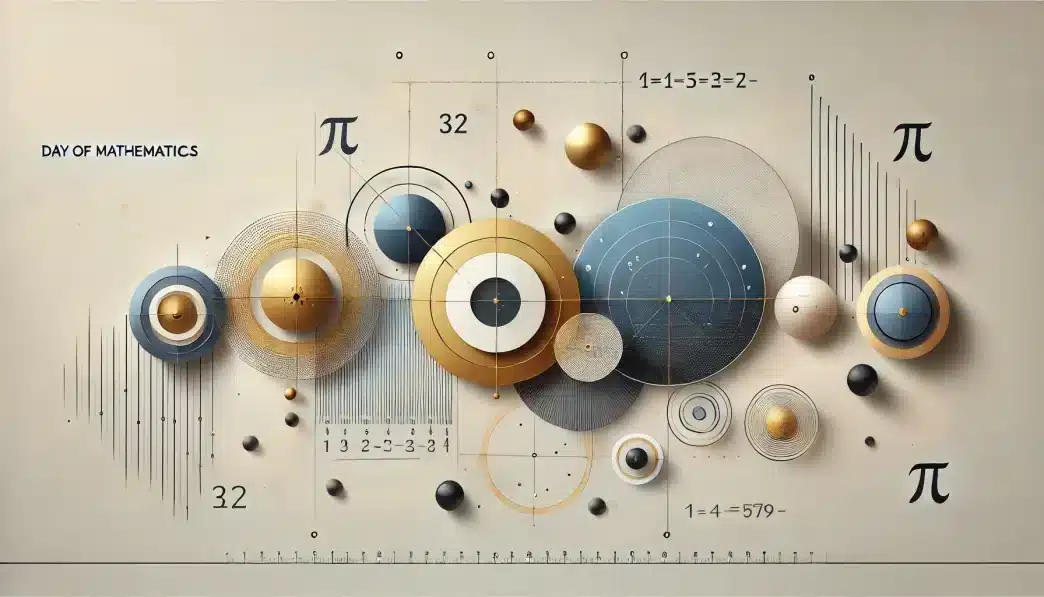
What is the International Day of Mathematics?
The International Day of Mathematics (IDM) is celebrated annually on March 14th to honor the significance of mathematics in our world. This date aligns with Pi Day, as the digits of pi (3.14) are represented by the date, making it a perfect occasion to celebrate the role of mathematics in various fields. The day raises awareness about the importance of math and its applications in science, technology, and everyday life.
History and Origin
The International Day of Mathematics was officially recognized by the UNESCO General Conference in 2019, with support from the International Mathematical Union (IMU) and other global math organizations. It serves as a platform to celebrate mathematical sciences, encourage participation in mathematics education, and raise awareness about the role math plays in solving global challenges.
The day also highlights math’s power to shape solutions to social, technological, and environmental issues, as well as its impact on culture and daily life.
Who Observes the International Day of Mathematics?
- Educational Institutions: Schools, colleges, and universities host events like math talks, workshops, and exhibitions to engage students in mathematical exploration.
- Mathematical Societies: Organizations such as the IMU coordinate global campaigns, promote events, and contribute educational resources to celebrate the day.
- Community Groups: Local organizations hold public talks, math-related activities, and competitions to raise awareness and spark interest in mathematics.
- Researchers and Academics: Researchers use this day to share discoveries, engage with the public, and promote the value of mathematics in solving real-world problems.
- Individuals: People worldwide celebrate the day through online activities, sharing mathematical facts, and encouraging others to explore the subject.
Themes and Slogans
Each year, IDM adopts a specific theme to focus on particular aspects of mathematics. Past themes have included “Mathematics for a Better World” and “Mathematics Unites.” These themes emphasize how mathematics contributes to global well-being, education, and innovation.
Colors, Symbols, and Patterns
Colors
- Blue: Represents the depth and breadth of mathematical knowledge.
- Green: Symbolizes growth and learning in mathematics.
- Yellow: Reflects the energy and innovation brought about by mathematical solutions.
Symbols
- Pi (π): A mathematical constant representing the relationship between a circle’s diameter and circumference. It is one of the most recognizable symbols in mathematics.
- Infinity (∞): A symbol that represents the concept of endless possibilities and the vast scope of mathematical exploration.
- Geometric Shapes: Circles, triangles, and other shapes illustrate the foundational concepts of mathematics and geometry.
Patterns
- Fractals: Complex patterns that are self-similar across different scales, showcasing the beauty of mathematical structures.
- Symmetry: Reflects the harmony and balance found in mathematical equations and natural forms.
- Spirals: Symbolize the infinite and cyclical nature of mathematical discoveries.
How to Celebrate the International Day of Mathematics
- Participate in Events: Join online or local workshops, talks, and math competitions to celebrate and learn about mathematics.
- Engage with Mathematical Exhibits: Visit museums, galleries, or virtual platforms that showcase math’s role in history and daily life.
- Explore Mathematical Challenges: Take part in math puzzles, games, or online challenges that stimulate problem-solving and critical thinking.
- Promote Awareness: Share facts about the importance of mathematics on social media using hashtags like #CelebrateMath and #PiDay.
- Support Math Education: Donate to or volunteer for organizations that promote math education and foster a love for the subject.
Most Used Hashtags
- #IDM2025
- #MathForABetterWorld
- #CelebrateMath
- #PiDay
- #MathematicsEverywhere
Why is the International Day of Mathematics Important?
The International Day of Mathematics emphasizes the fundamental role of math in modern society. Mathematics is not only a critical tool for solving scientific and technological challenges but also a discipline that fosters innovation, creativity, and logical thinking. By celebrating IDM, we inspire future generations to pursue mathematical careers and engage in learning that addresses global challenges, from climate change to technological advancements.
Related articles
Features
Contact Info
March 14: Day of Mathematics
Why do you keep falling for the same type?
Read the article Lovemaps: the hidden blueprint of our love.
Did you not find what you were looking for? Let me help you find more.