
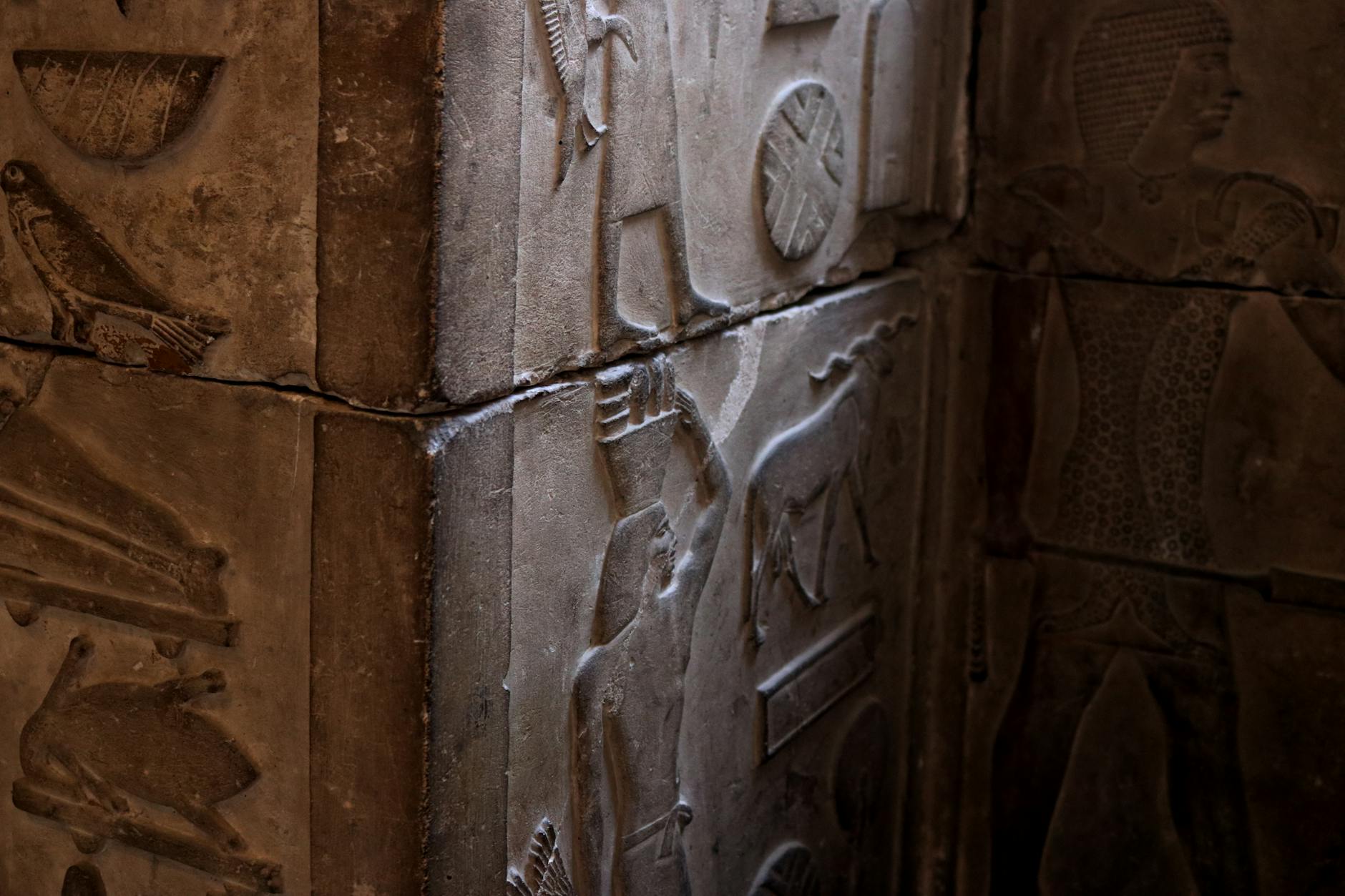
Unlocking the Secrets of Ancient Innovations
The Middle East is often referred to as the “Cradle of Civilization” due to its role in numerous groundbreaking innovations that shaped human history. Among these, the invention of writing in Mesopotamia around 3200 BCE allowed for the recording of laws, trade transactions, and literature. The cuneiform script, developed by the Sumerians, represented a significant advancement in communication.
Additionally, agriculture thrived in the Fertile Crescent, where early farmers domesticated crops like wheat and barley. This agricultural revolution laid the groundwork for settled societies and urban centers. The invention of the wheel around 3500 BCE further facilitated trade and transportation, fostering interconnectivity between communities.
Foundational Concepts: What Makes a Civilization?
Civilization is marked by several key characteristics, including urban development, social stratification, and governance systems. In the Middle East, cities like Uruk and Babylon emerged as bustling hubs of trade and culture.
- Urban Development: Cities served as centers of administration and commerce.
- Social Stratification: Different classes arose, from rulers to artisans.
- Governance: Early forms of government established laws to maintain order; Hammurabi’s Code is a notable example.
How it Works: The Mechanisms of Cultural Exchange
The Middle East’s strategic location at the crossroads of continents facilitated cultural exchange. Trade routes such as the Silk Road connected diverse civilizations, promoting not only economic activity but also the sharing of ideas and technologies.
For example, merchants exchanged silk from China for spices from India and gold from Africa. This interaction led to a rich tapestry of cultural influences that shaped art, religion, and philosophy across regions.
Common Myths: Debunking Misconceptions about the Middle East
Misinformation often clouds perceptions of the Middle East. One common myth is that this region is solely defined by conflict. However, it has also been a center of peace and cooperation throughout history.
- Myth: The Middle East is perpetually at war.
- Fact: Many periods saw flourishing trade and diplomacy among various cultures.
- Myth: The region is homogenous.
- Fact: It is a mosaic of diverse cultures, languages, and religions.
A Tapestry of Languages and Scripts
The linguistic diversity in the Middle East is striking. Languages such as Arabic, Hebrew, Persian, and Aramaic have coexisted for millennia, each contributing to the region’s rich cultural heritage. The development of scripts like Phoenician influenced alphabets worldwide and facilitated communication across different cultures.
Technological Breakthroughs that Shaped Civilization
The Middle East was home to numerous technological advancements that had lasting impacts on civilization. For instance, irrigation techniques allowed agriculture to flourish in arid climates, supporting larger populations. The ancient Babylonians developed a base-60 number system that still influences how we measure time today.
The Interplay of Conflict and Cooperation
The history of the Middle East is marked by both conflict and cooperation. While wars have erupted over resources and territorial disputes, there have also been remarkable instances of collaboration. During periods of relative peace, scholars from various backgrounds gathered in places like Baghdad’s House of Wisdom to share knowledge across disciplines such as medicine and philosophy.
Looking Ahead: Lessons from the Past for Future Generations
The rich history of the Middle East offers valuable lessons for contemporary society. Understanding how ancient civilizations thrived through innovation and cooperation can inspire modern approaches to global challenges.
By appreciating the complexities of this region’s past,both its conflicts and collaborations,we can foster dialogue and promote peace in a world that often seems divided. Embracing diversity as a strength will be crucial in creating a more harmonious future for all humanity.
Sources
- History of the Middle East – Wikipedia
- books.google.com
- www.cia.gov
- www.cia.gov
- books.google.com
- web.archive.org
- www.geocities.com
- www.ncbi.nlm.nih.gov
- doi.org
- pubmed.ncbi.nlm.nih.gov
- doi.org
Articles
- Latino Studies: Exploring Hispanic and Latino American Cultures and History
- The Controversial History of Lobotomy in Mental Health Treatment
- History of Communication Studies from Ancient Times to the 20th Century
- History of Theatre: Development and Evolution Over 2,500 Years
- History of Cameroon: From Pre-Colonial Times to Present Day
- The Late Heavy Bombardment: A Key Event in Early Solar System History
Days
- Saturday of March: Firefighter History Day (Netherlands)
- March 21: Independence Day (Namibia)
- March 21: Global Surveyors’ Day
- March 21: Oltenia Day (Romania)
- March 21: San Fabian Day (Philippines)
- March 21: Calapan City Foundation Day (Philippines)
Why do you keep falling for the same type?
Read the article Lovemaps: the hidden blueprint of our love.
Did you not find what you were looking for? Let me help you find more.
