
Many people mix up Ancient Rome with its contributions to modern society. This confusion often oversimplifies the complexity of its civilization and influence. The topic here is Ancient Rome and the common misunderstandings surrounding it. After reading, you'll be able to separate its historical significance from modern interpretations more clearly.
Unlocking the Secrets of Ancient Rome
Ancient Rome was a civilization that flourished on the Italian Peninsula from as early as the 8th century BC. Centered on the city of Rome, it expanded to become one of the largest empires in the ancient world, profoundly influencing law, governance, architecture, and culture across Europe and beyond.
The Legacy We Live Today
Influences on Modern Society
The impact of Ancient Rome is evident in today's legal systems, languages, and architectural styles. Many modern legal principles derive from Roman law, which emphasized rights and duties and established procedures for legal proceedings. The Romance languages,Spanish, French, Italian, Portuguese, and Romanian,originated from Latin, the language spoken by Romans.
Legal Foundations and Governance
Roman law, particularly the Twelve Tables, forms a significant part of contemporary legal frameworks. Concepts such as "innocent until proven guilty" trace their roots back to Roman legal practices. Additionally, ancient Roman governance introduced ideas about civic duty and participation that continue to influence democratic systems around the world.
Daily Life in the Roman Empire
Social Classes and Roles
Roman society was hierarchical, divided into several social classes: patricians (the elite), plebeians (the commoners), and slaves. Patricians held most political power while plebeians fought for representation through events like the Conflict of the Orders. Slaves performed essential labor but had limited rights.
Food, Fashion, and Fun
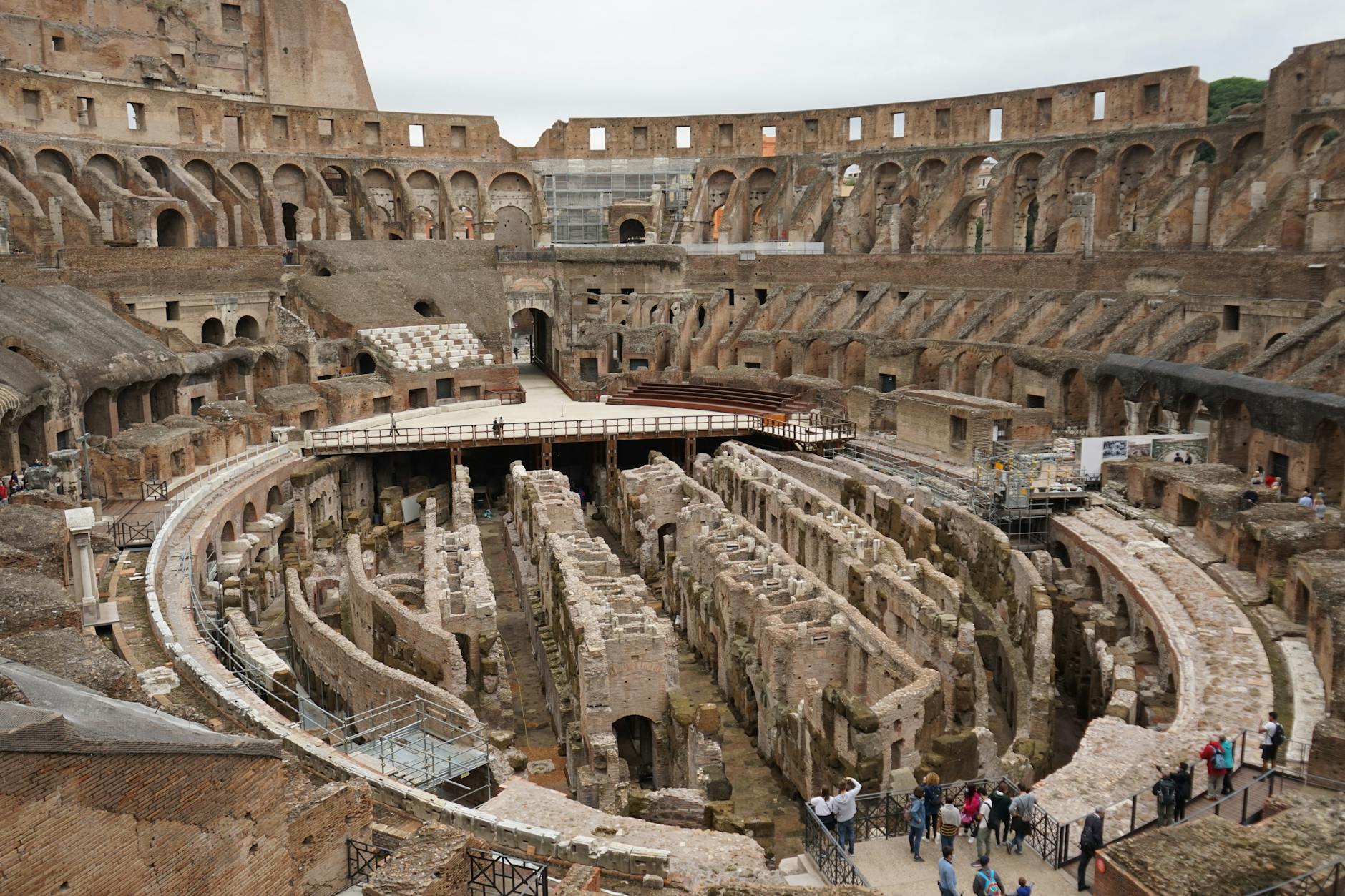
Daily life in Rome revolved around food and leisure. Romans enjoyed diverse diets that included bread, olives, fruits, vegetables, and meats. They often indulged in elaborate feasts. Fashion showcased social status: togas were worn by male citizens while women donned stolas, long dresses that signified respectability. Entertainment included chariot races at circuses and gladiatorial games in amphitheaters like the Colosseum.
How It Works: The Mechanics of Roman Society
Infrastructure and Engineering Marvels
The engineering prowess of Ancient Rome is legendary. They constructed roads that connected vast territories, facilitating trade and military movement. Aqueducts supplied cities with fresh water,a remarkable feat of engineering that remains impressive today.
The Role of Trade and Economy
Trade played a crucial role in the economy of Ancient Rome. The empire relied on extensive trade networks that spanned Europe, Asia, and Africa. Goods such as silk from China and spices from India flowed into Roman markets. This trade not only boosted wealth but also allowed cultural exchange among diverse peoples.
The Heart of Governance: Roman Political Systems
Key Institutions and Their Functions
The structure of Roman government evolved over time. It transitioned from a monarchy to a republic where elected officials governed alongside a Senate,a body representing Rome's elite families. Later came the imperial system under emperors who held significant power.
Civic Engagement and Citizen Rights
Civic engagement was vital in Roman society. Citizens participated in assemblies where they could vote on laws or elect officials. However, rights were often restricted based on social class; only free males had full citizenship rights.
Common Myths About Ancient Rome
Debunking Gladiator Stereotypes
Contrary to popular belief, gladiators were not universally slaves forced into combat; some were volunteers seeking fame or fortune. While their battles were brutal spectacles for entertainment, many gladiators enjoyed considerable popularity.
The Truth Behind Roman Baths
Roman baths served as social hubs rather than mere places for hygiene. They featured various rooms with different temperatures and served as venues for relaxation and socializing among all classes.
Religion and Belief Systems in Rome
The Pantheon of Gods and Goddesses
Roman religion was polytheistic; gods like Jupiter (king of gods), Juno (goddess of marriage), and Neptune (god of the sea) played crucial roles in daily life. Temples dedicated to these deities dotted the landscape.
Cult Practices and Rituals
Religious practices included rituals designed to appease gods or secure favor. These involved animal sacrifices at temples or festivals celebrating major deities.
Enduring Symbols of Power: Architecture and Art
Iconic Structures That Shaped Rome
Roman architecture left an indelible mark on urban planning worldwide. Structures like the Colosseum showcased engineering ingenuity while forums served as civic centers for political discourse.
The Evolution of Roman Art Styles
Art in Ancient Rome evolved from heavily influenced Hellenistic styles to more realistic representations that captured individual expressions, reflected in sculpture and frescoes found throughout former Roman territories. In summary, Ancient Rome's rich tapestry of history offers invaluable lessons still relevant today,from governance models to cultural practices. Its legacies continue to shape our world through laws, languages, architecture, and societal structures. Understanding this civilization provides insights into our own society's development over centuries.
Sources
- Outline of ancient Rome – Wikipedia
- penelope.uchicago.edu
- penelope.uchicago.edu
- doi.org
- www.jstor.org
- books.google.com
- en.wiktionary.org
- commons.wikimedia.org
- en.wikinews.org
- en.wikiquote.org
- en.wikisource.org
Afterword
The observation about the mix-up between Ancient Rome and its modern impact highlights a common issue in understanding history. By clarifying these distinctions, readers can appreciate the depth of Ancient Rome's legacy without oversimplifying its role in shaping contemporary society.
Articles
- History of Communication Studies from Ancient Times to the 20th Century
- Shang Dynasty: Overview of China's Ancient Bronze Age (c. 1600:1046 BC)
- Stromatolites: Ancient Layered Sedimentary Structures Explained
- The Aetolian League: An Ancient Greek Tribal Alliance Explained
- Post-Classical History: The Era Between Ancient and Modern Times
- Greenstone Belts: Metamorphosed Rock Zones in Ancient Cratons
Days
- April 8: Feng Shui Awareness Day
- April 8: Dog Fighting Awareness Day (United States)
- March / April: Easter Sunday
- April 5: Qingming Festival (China, Hong Kong, Macau, Taiwan and Tomb Sweeping Day)
- April 5: Read a Road Map Day (United States)
- April 5: Dandelion Day (United States)
Why do you keep falling for the same type?
Read the article Lovemaps: the hidden blueprint of our love.
Did you not find what you were looking for? Let me help you find more.
