

The Late Heavy Bombardment: A Key Event in Early Solar System History
Explore the Late Heavy Bombardment, a crucial early Solar System event that shaped planetary surfaces and influenced Earth’s geological history.

Explore the Late Heavy Bombardment, a crucial early Solar System event that shaped planetary surfaces and influenced Earth’s geological history.

Explore the fundamental principle of inertia in classical physics and its impact on everyday life, motion, and technology from cars to spacecraft.

Explore the fundamentals of heat transfer in thermal engineering and its impact on daily life, from cooking to smart home technologies and energy efficiency.

Explore the atmospheres of celestial bodies, their composition, pressure, and impact on climate and habitability across planets like Earth, Mars, and Venus.

Discover how solar wind, a stream of charged particles from the Sun, impacts Earth’s atmosphere, technology, and space weather phenomena like auroras.

Explore the Atomic Age since 1945, its impact on technology, nuclear energy’s role in daily life, and safety measures in modern nuclear plants.

Discover the astronomical unit, the key distance measurement between Earth and the Sun, essential for understanding our solar system and space exploration.

Explore the ancient planet Theia, believed to have collided with Earth 4.5 billion years ago, shaping our planet and forming the Moon.

Explore the characteristics, formation, and significance of planets in astronomy, including types of celestial bodies and the search for life beyond Earth.

Explore the giant-impact hypothesis explaining how the Moon formed from a colossal collision between Earth and a Mars-sized body named Theia 4.5 billion years ago.

Crater counting estimates planetary surface age by analyzing impact craters, revealing geological history and activity on bodies like the Moon and Mars.

Explore how gravity shapes our world, influences technology, and governs celestial motions. Understand its role from everyday life to the cosmos.

Explore Mars, the Red Planet, its unique features, environment, geological history, and the technology driving its exploration.

Explore the powerful stellar explosions known as supernovae, their causes, effects, and significance in the cosmos and our universe’s evolution.

Explore the basics of nuclear fusion, its potential as a clean energy source, and the challenges scientists face in making fusion a practical reality.
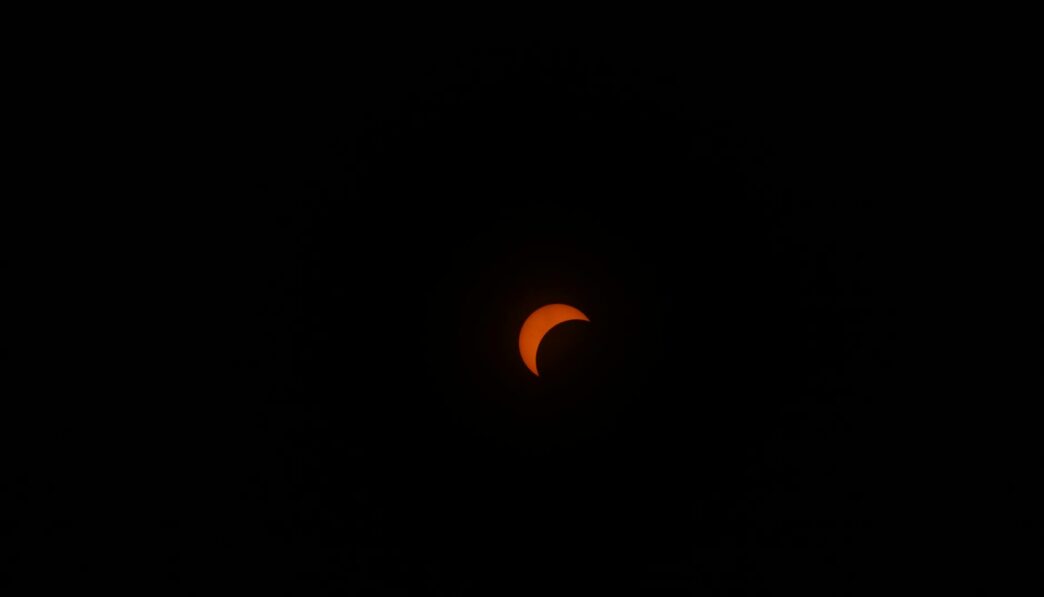
Explore the solar system’s structure, key celestial bodies, and the Sun’s role. Learn about planets, dwarf planets, asteroids, and future space missions.

Explore the Big Bang Theory and how the universe’s expansion shapes our understanding of cosmic origins, galaxies, and the future of the cosmos.

Explore scientific estimates of the universe’s age and their significance for understanding cosmic history, evolution, and future research directions.

Explore T Tauri stars, young variable stars key to understanding star formation, stellar evolution, and planet formation in astronomy.

Explore the fascinating world of supernovae, stellar explosions that shape the universe by creating elements and driving cosmic evolution.