

Protoplanetary Disks: Formation and Characteristics of Young Stars
Explore protoplanetary disks where young stars form and planets begin to develop. Learn about their structure, composition, and role in stellar evolution.

Explore protoplanetary disks where young stars form and planets begin to develop. Learn about their structure, composition, and role in stellar evolution.

Accretion in astrophysics explains how small particles merge to form massive celestial bodies like stars, planets, and black holes through gravitational attraction.

Explore the fascinating world of exoplanets, their discovery methods, types, and the impact of their research on science and the search for extraterrestrial life.

Explore the giant-impact hypothesis explaining how the Moon formed from a massive collision between Earth and a Mars-sized body called Theia billions of years ago.

Density is the ratio of mass to volume, affecting buoyancy, cooking, and construction. Learn its formula, units, and practical applications in daily life.

Measurement uncertainty is a key concept in metrology affecting accuracy in healthcare, engineering, and technology. Understanding it ensures safer, reliable decisions.

Explore the fundamentals of angular momentum, its conservation, and applications from spinning tops to quantum particles in physics.

Explore the formation and key characteristics of protoplanets, the early building blocks of planets that shape our solar system and support life.
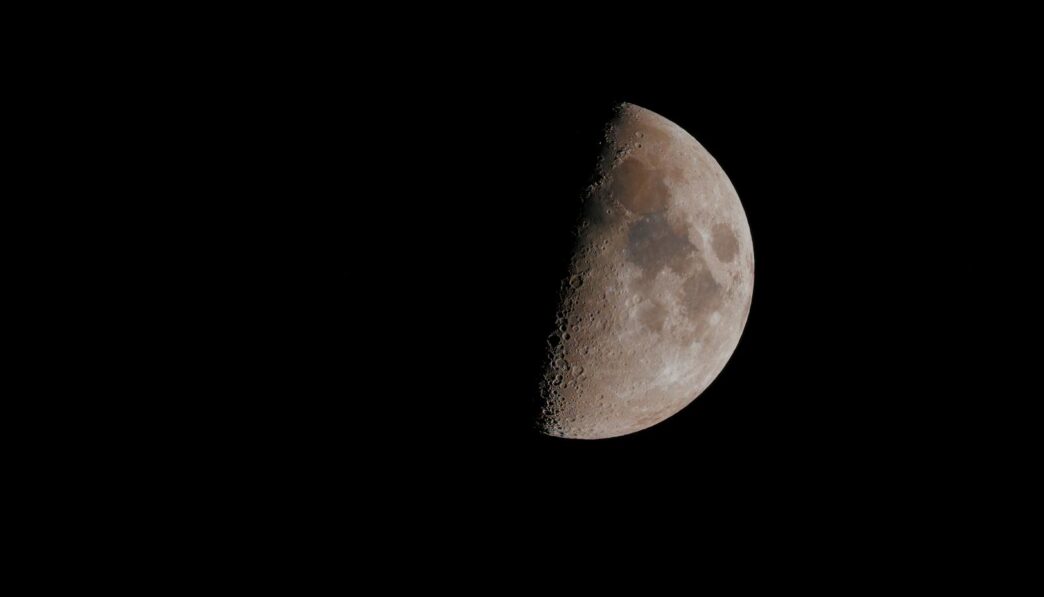
Explore the fascinating moons orbiting planets in our Solar System and their vital roles in planetary dynamics, climate, and potential for life.

Explore planetary differentiation, the process shaping planets’ internal layers and influencing their formation, structure, and potential for life.

Explore the 4.6 billion-year journey of the Solar System’s formation and evolution, from cosmic dust to planets and ongoing discoveries.

Explore Titan’s unique atmosphere, its composition, pressure, and intriguing weather patterns that reveal insights into planetary science and potential life beyond Earth.

Discover Neptune, the eighth planet from the Sun, its unique features, atmospheric dynamics, and its role in understanding planetary science and the search for life.

Explore the Apollo Program’s impact on lunar science, astronaut experiences, and its legacy inspiring future missions like NASA’s Artemis program.

Explore the nature of shock waves, their formation, types, and impact in fields like aviation, medicine, and astrophysics. Understand their role in everyday phenomena and science.

Explore how perturbation affects celestial orbits, causing deviations from perfect circles due to gravitational and non-gravitational forces in astronomy.
Explore the universe’s structure, age, and composition, from the Big Bang to dark matter and future cosmology discoveries. Understand cosmic evolution and common myths.

Explore the Sun, the central star of our solar system, its structure, importance for life, myths, and its influence beyond Earth.

Explore the recombination epoch in cosmology when neutral hydrogen formed, enabling photons to travel freely and shaping the Cosmic Microwave Background.

Explore the nebular hypothesis and how it explains the formation and evolution of our Solar System and other planetary systems in the universe.