
Understanding the Big Bang Theory and the Expansion of the Universe
Why the Big Bang Matters to You
The Big Bang Theory is the foundation of our understanding of the universe’s origin and evolution. By studying the Big Bang, scientists can answer profound questions about where we come from, how galaxies formed, and what the future of our universe may hold. This knowledge influences fields such as cosmology, physics, and philosophy.
Understanding the Big Bang enriches our perspective on life. It connects us to the cosmos and emphasizes that we are part of a vast, ever-expanding universe. From the atoms in our bodies to the stars in the sky, everything is interlinked through this cosmic history.
How the Universe Began: A Brief Overview
The Big Bang occurred around 13.8 billion years ago, marking the beginning of time and space as we know it. Initially, the universe was an incredibly hot, dense point known as a singularity. As it expanded, it cooled down, allowing particles to form. This process led to the creation of simple atoms like hydrogen and helium.
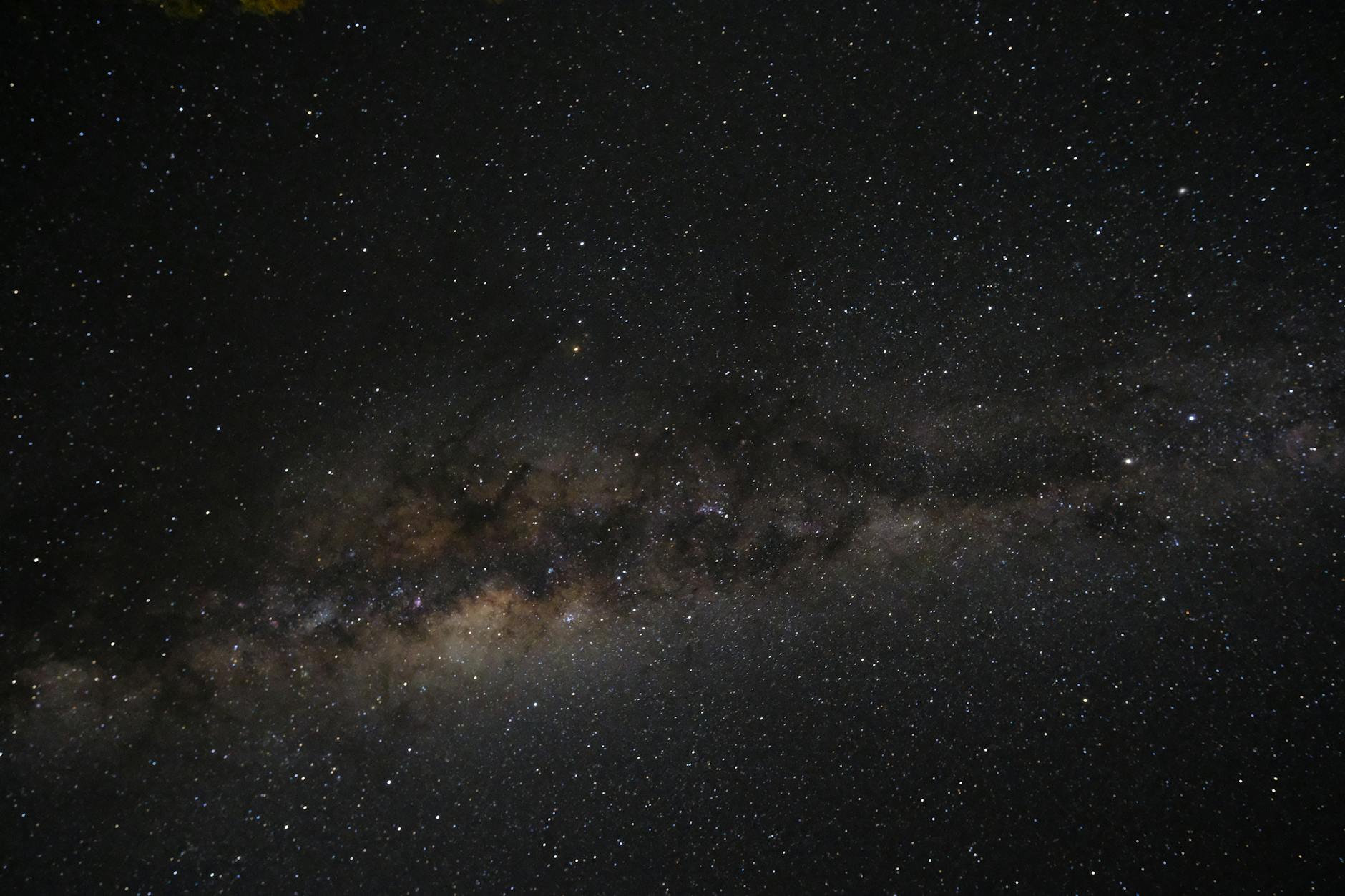
Over millions of years, these atoms coalesced under gravity to form stars and galaxies. For example, our own Milky Way galaxy took shape from swirling clouds of gas and dust, leading to the cosmos we observe today.
How It Works: The Mechanics of Cosmic Growth
The expansion of the universe can be likened to a balloon being inflated. As you blow air into a balloon, every point on its surface moves away from each other. Similarly, as space itself expands, galaxies move farther apart. This phenomenon is described by Hubble’s Law, which states that distant galaxies are receding faster than those nearby.
- Redshift: As galaxies move away from us, their light shifts toward the red end of the spectrum. This observation supports the idea of an expanding universe.
- Cosmic Microwave Background Radiation (CMBR): This faint glow filling the universe is a remnant from when it was hot and dense, providing critical evidence for the Big Bang.
Unpacking Common Myths About the Big Bang
Despite its widespread acceptance, several myths surround the Big Bang Theory. One common misconception is that it was an explosion in space. In reality, it was an expansion of space itself; there was no “center” where it happened.
Another myth is that all matter was created instantaneously during this event. Instead, it took millions of years for matter to coalesce into stars and galaxies. Understanding these nuances clarifies how our universe developed over time.
Key Evidence Supporting the Big Bang Theory
A variety of observations support the Big Bang Theory:
- Hubble’s Law: Edwin Hubble’s discovery that galaxies are moving away from us at speeds proportional to their distance corroborates cosmic expansion.
- CMBR: The uniform radiation detected across space aligns with predictions made by Big Bang models.
- Nucleosynthesis: The abundance ratios of light elements like hydrogen and helium match theoretical predictions derived from Big Bang nucleosynthesis models.
The Ongoing Journey of Cosmic Discovery
The study of the universe is ongoing, with new technologies and telescopes revealing deeper insights into cosmic phenomena. Missions like NASA’s James Webb Space Telescope aim to observe distant galaxies formed shortly after the Big Bang, providing clues about early cosmic conditions.
Additionally, researchers continue to explore dark matter and dark energy,mysterious components that make up most of our universe but remain poorly understood. These discoveries may significantly reshape our understanding of cosmic evolution.
Your Questions Answered: FAQs About the Big Bang
Q: How long did it take for the universe to cool down after the Big Bang?
A: Cooling occurred rapidly in the first few minutes after the Big Bang, allowing protons and neutrons to form within seconds and simple atoms within minutes.
Q: Will the universe keep expanding forever?
A: Current evidence suggests that it will continue expanding indefinitely due to dark energy pushing galaxies apart.
Q: Can we see evidence of the Big Bang today?
A: Yes! The CMBR and distant galaxies provide tangible evidence supporting this theory.
Sources
- Big Bang – Wikipedia
- map.gsfc.nasa.gov
- web.archive.org
- archive.org
- books.google.com
- ui.adsabs.harvard.edu
- doi.org
- search.worldcat.org
- arxiv.org
- ui.adsabs.harvard.edu
- doi.org
Why do you keep falling for the same type?
Read the article Lovemaps: the hidden blueprint of our love.
Did you not find what you were looking for? Let me help you find more.
