
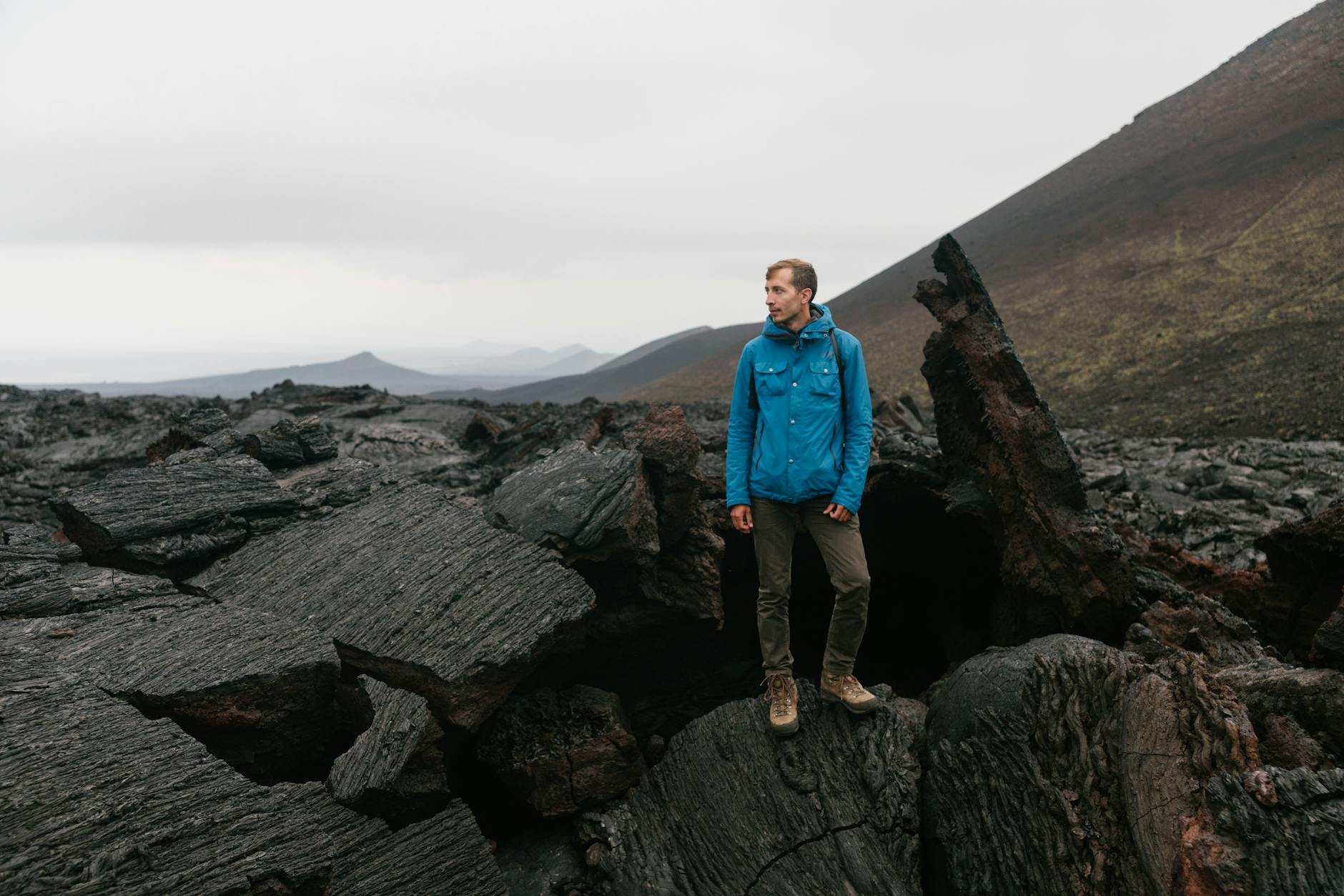
Why Volcanoes Matter to Everyday Life
Volcanic activity can significantly impact our lives, influencing climate, shaping landscapes, and affecting ecosystems. Understanding volcanism helps people stay informed about potential hazards and appreciate the benefits that volcanoes can bring.
Volcanism is the process where solids, liquids, gases, and their mixtures erupt to the surface of an astronomical body like a planet or moon. This occurs due to heat sources within the body, generated by processes such as radioactive decay or tidal heating. The heat causes solid material to partially melt or turn into gas, allowing it to rise and potentially break through the surface.
Impact on Climate and Environment
Volcanoes play a significant role in shaping the Earth's climate and environment. Large eruptions can inject ash and sulfur dioxide into the atmosphere, leading to cooling effects known as volcanic winters. These events can alter weather patterns and affect agriculture for years. For instance, during the 1991 eruption of Mount Pinatubo in the Philippines, global temperatures dropped by approximately 0.5 degrees Celsius for several years. Additionally, volcanic eruptions contribute to the formation of new landforms and habitats. Lava flows create new islands and landscapes, while volcanic ash enriches soil fertility, supporting agriculture in regions surrounding active volcanoes. This duality of destruction and creation underscores the complex relationship between humans and volcanoes.
Benefits Beyond Destruction
While eruptions can cause devastation, they also offer numerous benefits. Volcanic regions often host rich mineral deposits, including precious metals and geothermal energy sources. Geothermal power plants harness steam from underground reservoirs created by volcanic activity, providing renewable energy to communities. Moreover, tourism thrives in areas with active or dormant volcanoes. People visit these sites to witness eruptions or explore volcanic landscapes, contributing to local economies and fostering a deeper understanding of geological processes.
The Science Behind Volcanic Activity
What Triggers Eruptions?
Eruptions are triggered by various factors related to pressure and temperature changes within a volcano's magma chamber. As magma rises towards the surface, pressure decreases. If this pressure drops suddenly or if gases dissolved in the magma exsolve due to reduced pressure, it can lead to explosive eruptions. The type of eruption also depends on magma composition. More viscous magmas trap gases more effectively, leading to explosive eruptions, while less viscous magmas allow gases to escape more easily, resulting in gentle lava flows.
The Role of Pressure and Temperature
Pressure and temperature are critical in determining whether magma will erupt violently or flow gently. As magma ascends through the crust, it experiences decreasing pressure, which can lead to decompression melting. This process allows solid rock to melt into liquid magma at lower temperatures than would be required at greater depths. Temperature also influences magma viscosity; thicker magmas tend to trap gas bubbles more effectively than thinner ones. This relationship plays a crucial role in eruption dynamics.
How It Works: The Mechanics of a Volcano
Magma Generation and Movement
Magma forms through various melting processes within the Earth’s mantle and crust. Decompression melting occurs when hot material rises and experiences lower pressures as it ascends. Flux melting happens when volatiles such as water lower the melting point of rocks. Once generated, magma moves upward through cracks and fissures due to its lower density compared to surrounding rocks. This ascent can create dikes,vertical cracks filled with magma,or diapirs, which are bulges formed by accumulating molten rock.
Eruption Dynamics Explained
The dynamics of volcanic eruptions vary based on several factors including magma composition and gas content. During an eruption, gas bubbles expand rapidly as pressure decreases near the surface. This process can lead to explosive events where ash clouds are ejected high into the atmosphere or more tranquil lava flows that slowly emerge from vents. Understanding these dynamics is crucial for predicting potential hazards associated with volcanic activity.
Common Myths About Volcanoes
Myth: All Volcanoes are Dangerous
Not all volcanoes pose immediate danger. While some are highly explosive like Mount St. Helens or Kilauea in Hawaii, others may remain dormant for centuries without erupting. Many volcanoes primarily produce gentle lava flows that cause minimal harm to surrounding areas unless they obstruct human activity or infrastructure.
Myth: Eruptions are Predictable
While scientists use various methods to monitor volcanic activity such as seismographs and satellite imagery, predicting an eruption with certainty remains challenging. Factors like underground magma movement and gas buildup are complex and not fully understood. Eruptions may occur suddenly without clear warnings despite extensive monitoring efforts.
Diverse Forms of Volcanic Expression
Shield vs. Stratovolcanoes: What’s the Difference?
Volcanoes come in various shapes depending on their eruption styles. Shield volcanoes have broad bases with gentle slopes formed by low-viscosity lava flows that travel far from the vent, such as Mauna Loa in Hawaii. In contrast, stratovolcanoes feature steeper profiles built from alternating layers of lava flows and ash deposits; an example being Mount Fuji in Japan. These formations typically result from more explosive eruptions.
Submarine Volcanism: The Hidden Giants
Most volcanic activity occurs underwater at mid-ocean ridges where tectonic plates diverge. Submarine volcanoes create new oceanic crust as molten rock erupts beneath sea level. These eruptions contribute significantly to ocean chemistry and influence marine ecosystems but often go unnoticed by humans.
The Global Volcanic Landscape
Hotspots vs. Plate Boundaries
Volcanoes form both at tectonic plate boundaries,where plates converge or diverge,and over hotspots,areas where plumes of hot mantle material rise independently of plate boundaries (e.g., Hawaii). Hotspot volcanism can create chains of islands as tectonic plates move over stationary hotspots.
Volcanoes as Indicators of Earth’s Health
Scientists study volcanoes not only for their immediate effects but also as indicators of planetary health. Changes in volcanic activity may signal shifts in tectonic movements or alterations in Earth’s internal heat flow. Monitoring these changes provides valuable insights into geological processes that shape our planet.
The Future of Volcanology: New Frontiers in Research
Technological Advances in Monitoring
Advancements in technology enhance our ability to monitor volcanic activity closely. Remote sensing techniques using satellites provide real-time data on thermal anomalies and ground deformation around volcanoes. These tools improve predictive capabilities and help mitigate risks associated with eruptions.
Understanding Extraterrestrial Volcanism
Volcanism is not limited to Earth; other celestial bodies exhibit volcanic features too. For instance, Io,the most volcanically active body in our solar system,is constantly reshaped by sulfuric eruptions due to tidal heating from Jupiter’s gravitational pull. Research into extraterrestrial volcanism helps scientists understand planetary formation processes across our solar system.In summary, studying volcanism reveals much about Earth’s dynamic systems while also providing crucial information for disaster preparedness and resource management.
Sources
- Volcanism – Wikipedia
- www.sciengine.com
- ui.adsabs.harvard.edu
- doi.org
- universemagazine.com
- books.google.com
- doi.org
- books.google.com
- ntrs.nasa.gov
- web.archive.org
- www.asu.edu
Why do you keep falling for the same type?
Read the article Lovemaps: the hidden blueprint of our love.
Did you not find what you were looking for? Let me help you find more.
