
Unlocking the Secrets of Ancient Egypt
Ancient Egypt, often referred to as the cradle of civilization, has captivated historians and archaeologists for centuries. This civilization flourished along the banks of the Nile River for over 3,000 years, leaving behind a rich tapestry of cultural achievements and monumental structures. Ongoing archaeological research continues to reveal insights into daily life, social structures, and burial practices in this ancient society.
The Nile: Lifeblood of a Civilization
The Nile River was foundational to Ancient Egyptian civilization. Spanning over 4,000 miles, it provided fertile soil through annual flooding, which allowed agriculture to thrive. The predictable flooding pattern enabled farmers to cultivate staple crops such as wheat and barley.
- Annual floods deposited nutrient-rich silt on the banks, enhancing agricultural productivity.
- The river served as a transportation route for goods and people, promoting trade and communication.
- Fish and wildlife along the Nile supplemented diets and contributed to local economies.
How It Works: The Mechanics of Ancient Society
Ancient Egyptian society was highly stratified yet interconnected. At the top were the pharaohs, considered divine rulers with absolute power. Below them were nobles and priests who managed religious practices and governance. Artisans and traders formed the middle class, while farmers and laborers constituted the lower class.
This hierarchical structure ensured effective resource management. During times of drought or famine, the state could redistribute grain from stored reserves to support those in need. Such organization exemplified their advanced understanding of resource management and social responsibility.
Common Myths About Ancient Egypt
Despite its rich history, many misconceptions persist about Ancient Egypt. One common myth is that all Egyptians were enslaved; in reality, most were free citizens engaged in farming or skilled trades. Another myth suggests that pyramids were built by slaves; evidence indicates they were constructed by a well-fed workforce who took pride in their labor.
These myths often stem from popular media portrayals rather than historical facts. Understanding the true nature of Ancient Egyptian society helps appreciate its complexity beyond mere stereotypes.
Art and Architecture: More Than Meets the Eye
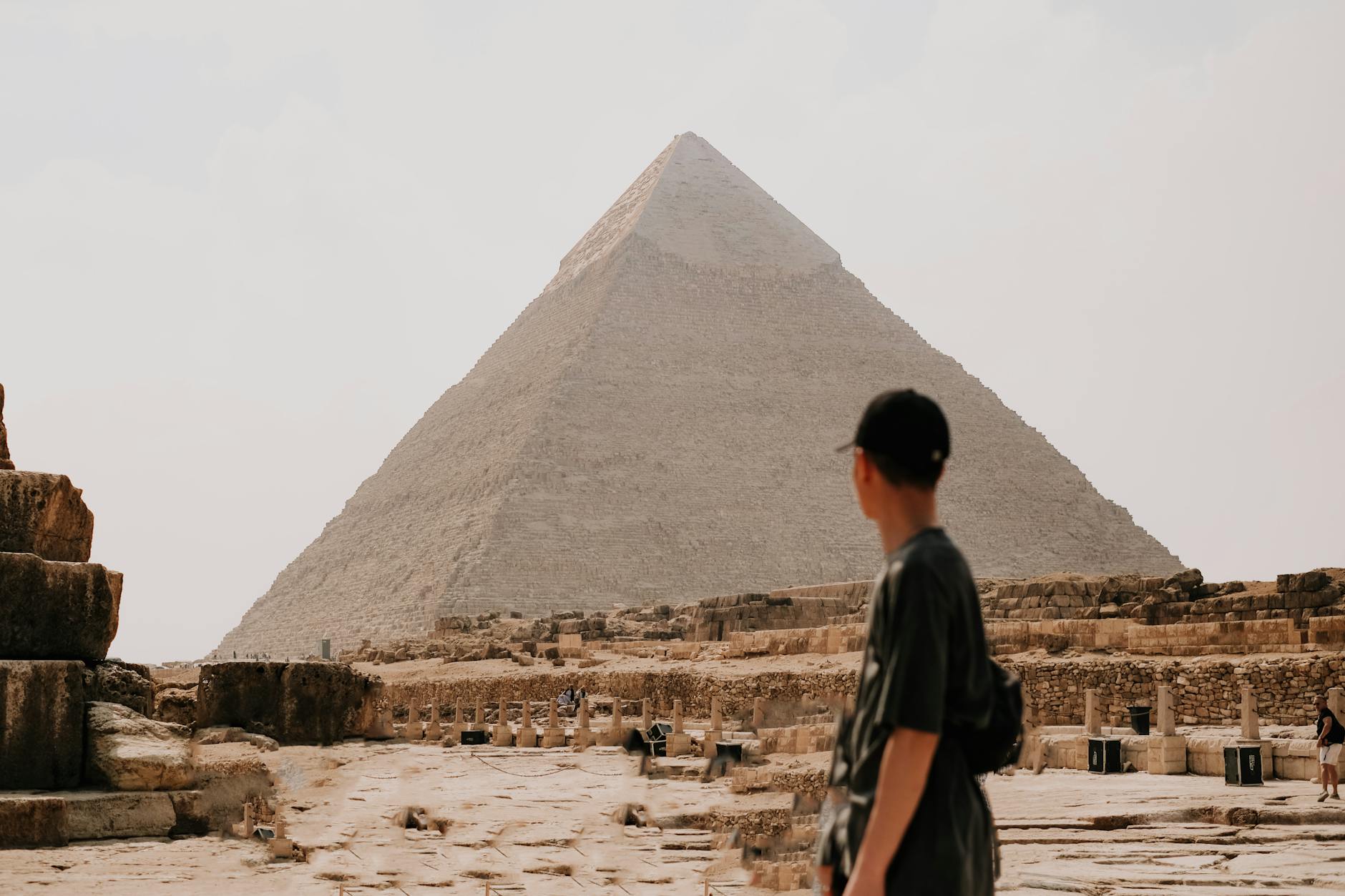
The art and architecture of Ancient Egypt serve as a testament to their advanced society. Monumental structures like the Great Pyramid of Giza were not only tombs but also symbols of power and religious significance. Their precise alignment with cardinal points reflects a sophisticated understanding of astronomy.
- Hieroglyphics adorned walls tell stories of gods, pharaohs, and daily life.
- Sculptures were crafted with a focus on symmetry and proportion, emphasizing idealized forms.
- Temples served both as places of worship and centers for community gatherings.
The Role of Religion in Daily Life
Religion permeated every aspect of life in Ancient Egypt. The pantheon included gods like Ra, Osiris, and Isis, each representing different elements of life and death. Religious festivals marked the calendar year, providing opportunities for communal celebration and reflection on spiritual beliefs.
Daily practices included offerings at household shrines to honor deities and ensure protection. The belief in an afterlife led to elaborate burial customs aimed at preserving the body for eternity; this is why mummification became prevalent among both elites and commoners over time.
The Enduring Legacy of Ancient Egypt
The legacy of Ancient Egypt continues to resonate today through art, architecture, literature, and religious thought. Its innovations in writing systems influenced later cultures; for instance, hieroglyphs share similarities with other ancient scripts. Moreover, principles from Egyptian law laid foundations for future legal systems across civilizations.
Today’s fascination with Ancient Egypt is evident in museums worldwide where artifacts are displayed. This enduring interest highlights not only their achievements but also our ongoing quest to understand human history. As we continue to study this remarkable civilization, we unlock more secrets that connect us to our shared past.
Sources
- Ancient Egypt – Wikipedia
- unesdoc.unesco.org
- doi.org
- search.worldcat.org
- onlinelibrary.wiley.com
- ui.adsabs.harvard.edu
- doi.org
- search.worldcat.org
- pubmed.ncbi.nlm.nih.gov
- www.ncbi.nlm.nih.gov
- ui.adsabs.harvard.edu
Why do you keep falling for the same type?
Read the article Lovemaps: the hidden blueprint of our love.
Did you not find what you were looking for? Let me help you find more.
