
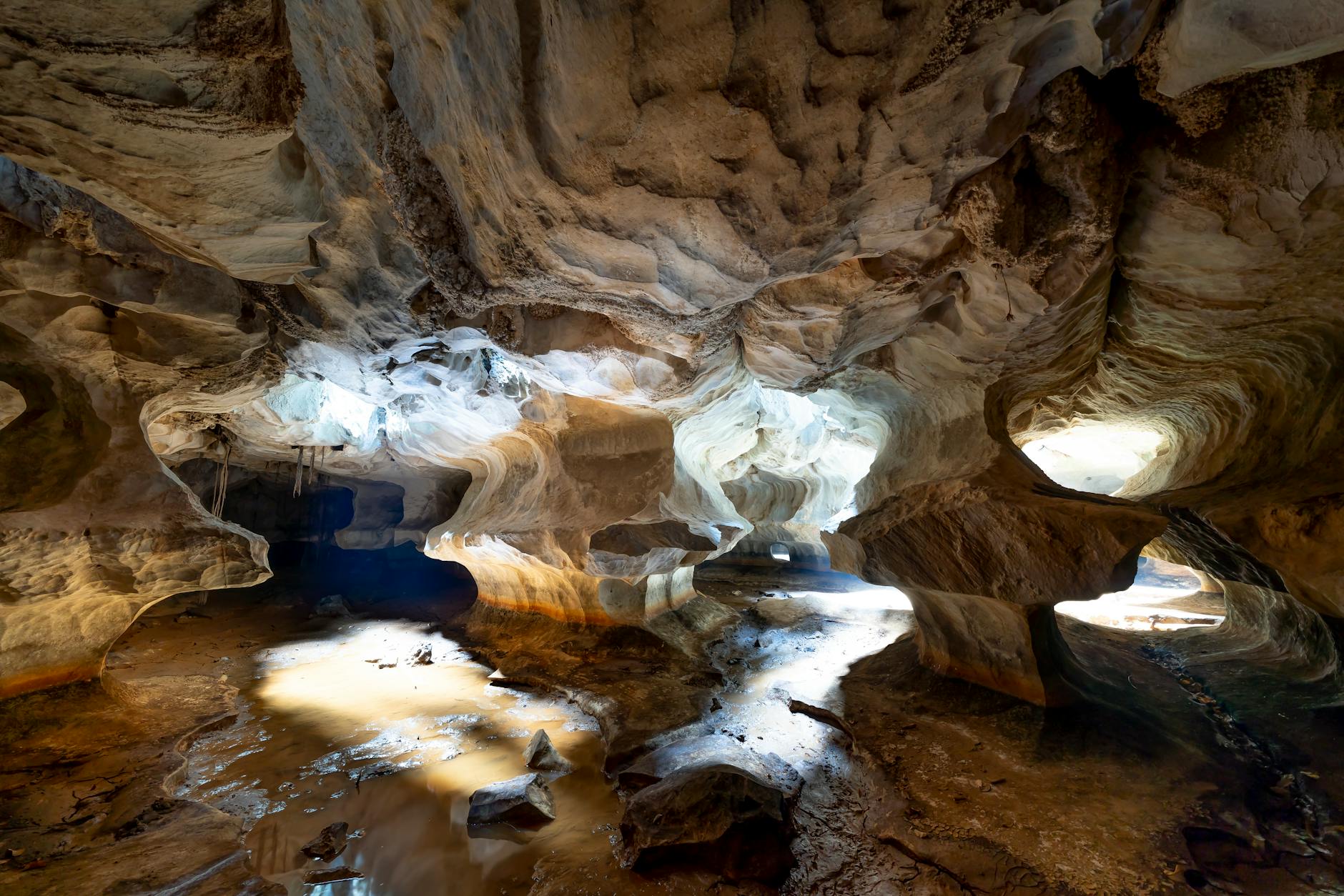
Unlocking Earth’s Story: The Geologic Time Scale
The geologic time scale is a system that organizes Earth’s history into distinct intervals based on significant geological and biological events. By dividing time into eons, eras, periods, epochs, and ages, scientists can better understand the complex narrative of our planet’s past. This framework highlights the age of Earth, estimated to be about 4.54 billion years, and reveals how life has evolved in response to changing environments.
How It Works: Reading the Rock Record
The geologic time scale is primarily constructed from the rock record. Geologists study sedimentary layers, which form through processes like erosion and deposition. Each layer, or stratum, represents a specific period in time. The principle of superposition states that in undisturbed layers, the oldest rocks are at the bottom while the youngest are at the top.
To date these layers accurately, scientists use radiometric dating techniques that measure the decay of radioactive isotopes. For example:
- Carbon-14 dating: Used for dating recent organic materials up to about 50,000 years old.
- Uranium-lead dating: Effective for dating ancient rocks over millions of years old.
Common Misconceptions About Geologic Time
Many people struggle to grasp the vastness of geologic time. A common misconception is that geological changes occur rapidly. In reality, many processes take millions of years. For instance, mountain ranges can take tens of millions of years to form through tectonic activity. Additionally, people often assume that all dinosaurs lived at the same time; however, they existed over a span of roughly 165 million years, from the Late Triassic to the end of the Cretaceous period.
- Misconception: Dinosaurs coexisted with humans.
- Fact: Dinosaurs went extinct around 65 million years ago, long before humans appeared.
Key Eras: A Glimpse into Earth’s Past
The geologic time scale is divided into several key eras:
- Paleozoic Era: Marked by the emergence of complex life forms in oceans and on land.
- Mesozoic Era: Known as the “Age of Reptiles,” this era saw dinosaurs dominate terrestrial ecosystems.
- Cenozoic Era: Often referred to as the “Age of Mammals,” it began after the mass extinction event that ended the Mesozoic.
Each era is further divided into periods that reflect important evolutionary milestones or catastrophic events, such as mass extinctions.
The Role of Fossils in Timekeeping
Fossils play a crucial role in understanding geologic time. They provide evidence of past life forms and their environments. By studying fossilized remains, paleontologists can establish relative ages for rock layers. For instance, if a certain type of trilobite is found in a rock layer, scientists can determine its age based on known trilobite evolution timelines.
Index fossils,species that were widespread but existed for a relatively short period,are particularly useful for correlating ages across different regions.
Human Impact on Geological Time
The Anthropocene is a proposed epoch that highlights human influence on Earth’s geology and ecosystems. Activities such as deforestation, pollution, and climate change are altering landscapes at an unprecedented rate. Some scientists argue that we are creating a new geological layer characterized by plastic pollution and carbon emissions.
Future of Geologic Time Studies
The study of geologic time continues to evolve with advancements in technology and methodology. New techniques like high-resolution imaging and genetic analysis are providing deeper insights into Earth’s history and its biological evolution. For example:
- Geochronology: Improved dating methods are refining our understanding of when major events occurred.
- Paleoecology: Studying ancient environments helps predict future ecological changes due to climate shifts.
This ongoing research aims not only to unravel Earth’s past but also to inform our future actions as stewards of this planet.
Sources
- Geologic time scale – Wikipedia
- geoltime.github.io
- geoltime.github.io
- geoltime.github.io
- geoltime.github.io
- geoltime.github.io
- geoltime.github.io
- geoltime.github.io
- geoltime.github.io
- geoltime.github.io
- geoltime.github.io
Why do you keep falling for the same type?
Read the article Lovemaps: the hidden blueprint of our love.
Did you not find what you were looking for? Let me help you find more.
