
Why Moons Matter: The Hidden Influencers of Our Universe
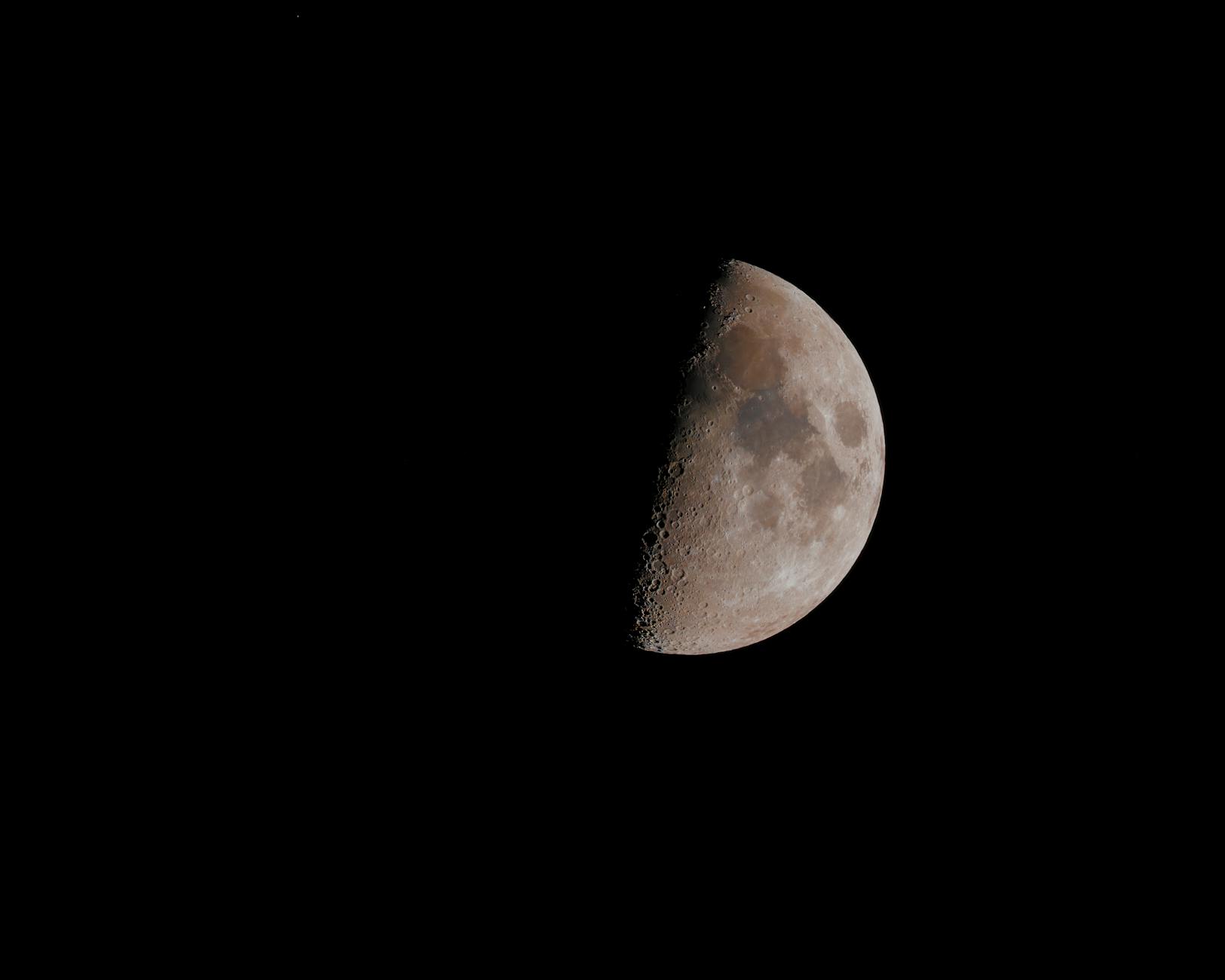
On a clear night, a child gazes up at the sky, mesmerized by the glowing orb that lights up the darkness. This celestial body is not just a beautiful sight; it serves as a natural satellite, influencing life on Earth in significant ways. Understanding moons and their functions is essential because they play crucial roles in the dynamics of planetary systems and can affect climates and life itself.
A natural satellite is an astronomical body that orbits a planet, dwarf planet, or small Solar System body, often referred to colloquially as a moon. In our Solar System, there are 419 confirmed natural satellites across various planetary systems.
The Role of Moons in Planetary Systems
Moons serve as important companions to their host planets. They can stabilize planetary rotation and tilt, impacting climate patterns. For example, Earth’s Moon stabilizes our planet’s axial tilt, which moderates our seasons. Additionally, moons interact with their parent planets through gravitational forces, resulting in tidal heating, which is essential for geological activity on some moons.
Impact on Life and Climate
The presence of a moon can significantly influence life and climate conditions on its planet. For instance, Earth’s Moon creates tides that have shaped coastal ecosystems over millions of years. On other planets like Jupiter’s moon Europa, scientists believe that subsurface oceans may harbor life due to tidal heating from its gravitational interactions with Jupiter.
A Glimpse at the Diverse Types of Moons
Ice Giants and Their Unique Companions
The ice giants Uranus and Neptune host several moons with unique characteristics. For instance, Triton, Neptune’s largest moon, has a retrograde orbit, indicating it was likely captured rather than formed in place. This capture may have led to its unusual geological features and potential for cryovolcanism.
Rocky Moons: More Than Just Space Debris
Many moons are rocky bodies that provide insights into the history of their parent planets. For example, Mars’ moons Phobos and Deimos are thought to be captured asteroids from the asteroid belt. Studying these moons helps scientists understand the processes of formation and evolution within our Solar System.
How It Works: The Mechanics of Moon Formation
Theories Behind Moon Creation
There are several theories regarding how moons form. One prevalent theory suggests that regular satellites form from circumplanetary disks,disks of material that remain after a planet’s formation. Irregular satellites are thought to be captured objects from elsewhere in the Solar System.
Gravitational Dance: How Moons Stay in Orbit
Moons remain in orbit due to gravitational forces between them and their parent planets. The balance between gravitational attraction and their orbital velocity keeps them stable in their paths. This gravitational interaction can lead to phenomena like tidal locking, where a moon spins on its axis at the same rate it orbits its planet.
Common Myths About Moons Debunked
Myth: All Moons Are the Same Size
Many people assume all moons are similar in size. In reality, they vary widely; for instance, Ganymede is larger than Mercury while others like Deimos are much smaller than Earth’s Moon.
Myth: Moons Are Just Rocks Floating in Space
Another misconception is that moons are merely lifeless rocks. Many moons exhibit geological activity or even atmospheres. Triton has geysers that spew nitrogen gas, while Europa is believed to have an ocean beneath its icy surface.
The Science of Studying Moons: Techniques and Technologies
Telescopes and Remote Sensing
Astronomers utilize powerful telescopes and remote sensing technologies to study moons from afar. These methods allow researchers to gather data on surface compositions, atmospheres, and potential geological activity without needing to land on these distant worlds.
Space Missions and Their Discoveries
Numerous space missions have explored various moons throughout our Solar System. NASA’s Galileo spacecraft provided vital information about Jupiter’s Galilean moons, while missions like Cassini have revealed much about Saturn’s complex moon system.
The Future of Moon Exploration: What Lies Ahead?
Upcoming Missions to Other Moons
The future holds exciting possibilities for lunar exploration. Upcoming missions aim to investigate icy bodies like Europa and Enceladus for signs of life or habitable conditions beneath their surfaces.
The Potential for Human Habitation
Some researchers consider the potential for human habitation on certain moons such as Titan due to its thick atmosphere and liquid hydrocarbon lakes. These environments could serve as future outposts for human exploration beyond Earth.
Conclusion: The Enduring Fascination with Our Celestial Neighbors
Moons continue to captivate our imaginations while also providing key insights into planetary systems and potential habitats for life beyond Earth. As technology advances and exploration missions expand, our understanding of these celestial neighbors will deepen, revealing more about their roles in shaping not just their worlds but possibly ours too.
Sources
- Natural satellite – Wikipedia
- planetarynames.wr.usgs.gov
- www.johnstonsarchive.net
- arxiv.org
- ui.adsabs.harvard.edu
- doi.org
- api.semanticscholar.org
- web.archive.org
- www.jpl.nasa.gov
- books.google.com
- books.google.com
Why do you keep falling for the same type?
Read the article Lovemaps: the hidden blueprint of our love.
Did you not find what you were looking for? Let me help you find more.
