
Why Water Vapor Matters in Your Daily Life
Have you ever stepped outside on a hot summer day and instantly felt the heaviness of humidity in the air? That sensation is the presence of water vapor, an invisible but significant component of our atmosphere. Water vapor plays a crucial role in weather patterns, influences climate change, and impacts our daily lives. Understanding its properties can help us better appreciate its impact on both local weather and global climate systems.
Water vapor, also known as aqueous vapor, is the gaseous phase of water. It represents one state of water within the hydrosphere and is continuously produced through processes like evaporation and sublimation. Water vapor acts as a greenhouse gas, contributing significantly to the greenhouse effect and shaping our climate.
The Role in Weather Patterns
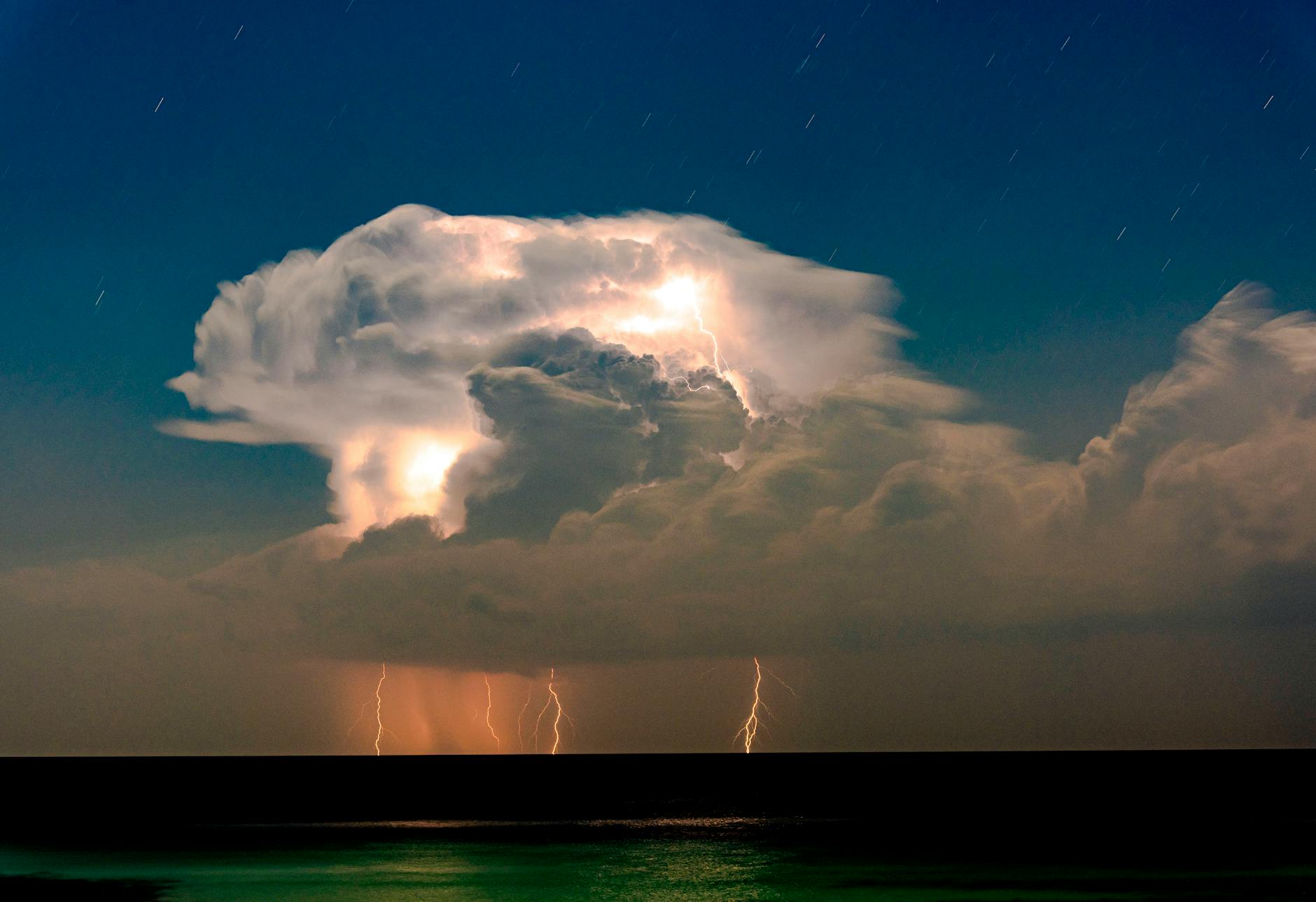
Water vapor is a key player in weather systems. It influences the formation of clouds, fog, and precipitation. When water vapor condenses into liquid droplets or ice crystals, it releases latent heat into the atmosphere. This release of heat fuels storm systems and can lead to severe weather events such as thunderstorms and hurricanes. For example, tropical cyclones derive their energy from warm ocean waters that evaporate and contribute to atmospheric moisture.
The amount of water vapor in the air varies dramatically based on location and temperature. In humid regions, the concentration can exceed 4%, while in colder areas, it may drop below 0.01%. This variability affects local weather conditions and can lead to substantial differences in temperature and precipitation patterns across different seasons.
Influence on Climate Change
Water vapor significantly contributes to climate change as it amplifies the effects of other greenhouse gases like carbon dioxide and methane. When temperatures rise due to increased carbon emissions, more water evaporates, leading to higher concentrations of water vapor in the atmosphere. This creates a feedback loop: warmer temperatures lead to more water vapor, which in turn causes further warming.
The Intergovernmental Panel on Climate Change (IPCC) estimates that for every degree Celsius increase in temperature, the atmosphere’s capacity to hold water vapor increases by approximately 7%. As global temperatures rise, we can expect more extreme weather events, including heavier rainfall and more intense droughts.
The Science Behind Water Vapor
What Is Water Vapor?
Water vapor is simply water in its gaseous form. It arises from various processes such as evaporation from oceans, lakes, rivers, and soil surfaces. Additionally, sublimation occurs when ice transitions directly into vapor without first becoming liquid. Despite being invisible, water vapor constitutes a significant portion of atmospheric moisture content.
How It Forms and Transitions
The transition from liquid water to vapor occurs through evaporation or boiling when heat energy is added. Conversely, condensation happens when water vapor cools down and changes back into liquid form. Factors such as temperature and pressure strongly influence these transitions.
Humidity describes the amount of water vapor present in the air. There are two main ways to measure humidity: specific humidity (the mass of water vapor per unit mass of air) and relative humidity (the percentage of moisture present compared to what the air can hold at that temperature). Understanding humidity helps us predict weather patterns accurately.
How It Works: The Journey of Water Molecules
From Liquid to Gas: The Process Explained
The process begins when a water molecule absorbs enough energy from heat sources like sunlight or warm surfaces to overcome intermolecular forces holding it in liquid form. This results in evaporation; water molecules escape into the air as gas. Interestingly, this process cools the remaining liquid water due to energy loss.
The Cycle of Water in Nature
This cycle continues with condensation: when warm air containing water vapor rises, it cools down at higher altitudes where temperatures are lower. As it cools, it loses energy and condenses into tiny droplets or ice crystals forming clouds. Eventually, these droplets grow larger until they fall as precipitation (rain or snow), replenishing bodies of water on Earth.
Common Misconceptions About Water Vapor
Myth: All Humidity Is Bad for You
Many people associate high humidity with discomfort; however, some level of humidity is necessary for life. Plants require moisture from the atmosphere for photosynthesis; thus, humidity plays an essential role in agriculture and ecosystem health.
Myth: Water Vapor Is Just a Minor Player in the Atmosphere
Contrary to popular belief, water vapor is not a minor component but rather one of the most significant greenhouse gases affecting Earth’s climate system. Its ability to trap heat makes it vital for maintaining temperatures conducive to life on our planet.
Measuring Water Vapor: Tools and Techniques
Instruments Used in Meteorology
Meteorologists use various instruments to measure water vapor levels in the atmosphere accurately. One common device is a hygrometer, which tracks humidity levels through changes in physical properties of materials exposed to moisture.
Data Collection Methods
Remote sensing techniques also play a critical role in measuring atmospheric water vapor using satellites equipped with specialized sensors that detect electromagnetic absorption by water molecules. These methods provide valuable data for understanding global moisture distribution patterns.
The Future of Water Vapor Research
Innovations in Climate Modeling
Advancements in climate modeling increasingly incorporate detailed representations of water vapor dynamics. Improved models can better simulate how changes in temperature affect atmospheric moisture levels and precipitation patterns over time.
Potential Impacts on Weather Prediction
An enhanced understanding of water vapor will lead to more accurate weather forecasts. As climate change alters moisture distribution patterns globally, refining predictive models becomes crucial for preparing for extreme weather events.
Conclusion: Embracing the Invisible Element
The Importance of Awareness and Education
As we continue to experience shifts in climate patterns worldwide, awareness about the role of water vapor becomes increasingly essential. Educating ourselves about this invisible yet powerful component can empower us to make informed decisions regarding environmental issues.
Your Role in Understanding Climate Dynamics
You have the power to contribute positively by learning more about how your actions impact atmospheric conditions. By reducing carbon footprints or supporting sustainable practices, you help mitigate changes that affect global humidity levels and ultimately our planet’s health.
Sources
- Water vapor – Wikipedia
- amsglossary.allenpress.com
- climate.copernicus.eu
- web.archive.org
- climatelabbook.substack.com
- web.archive.org
- www.weatherquestions.com
- science.nasa.gov
- web.archive.org
- www.grow.arizona.edu
- www.thermexcel.com
Why do you keep falling for the same type?
Read the article Lovemaps: the hidden blueprint of our love.
Did you not find what you were looking for? Let me help you find more.
