
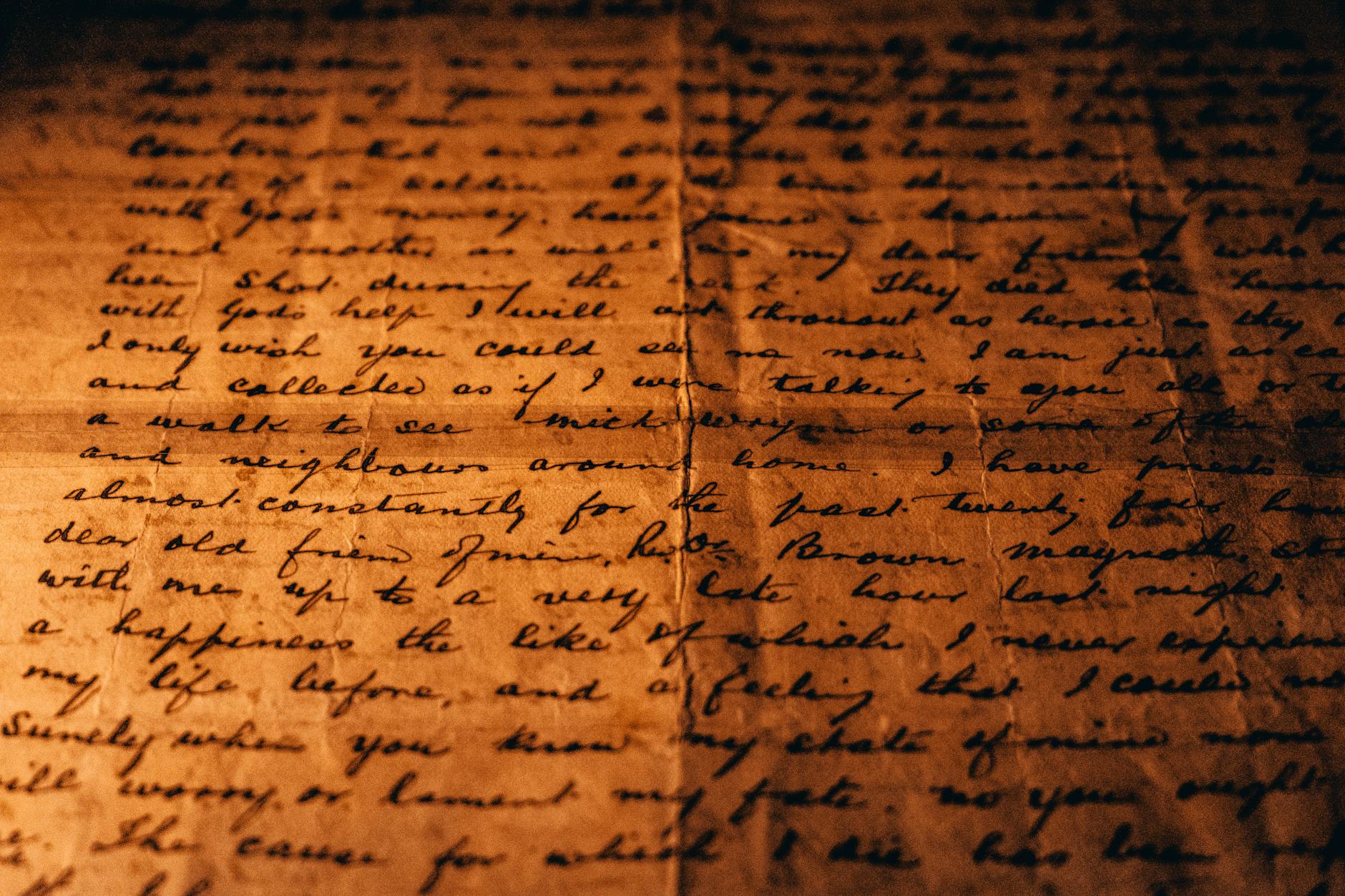
Unlocking the Past: Why Writing Matters Today
Writing is more than just a method of communication; it is a powerful tool that has shaped civilizations. It allows us to document history, share knowledge, and express ideas. In our digital age, writing remains crucial for education, business, and personal expression. It helps preserve culture and fosters connections across time and space.
A Journey Through Time: The Evolution of Scripts
The development of writing systems began around 3200 BCE with cuneiform in Mesopotamia. This early script involved pressing a reed stylus into clay tablets, creating wedge-shaped marks. Over time, other cultures developed their own systems. For instance, Egyptian hieroglyphs emerged around 3100 BCE, combining logographic and alphabetic elements to convey complex meanings.
As societies evolved, so did their writing systems. The Phoenician alphabet, created around 1200 BCE, was revolutionary because it simplified writing to 22 characters representing sounds. This system influenced many others, including Greek and Latin alphabets, which are still in use today.
Notable Milestones
- c. 3200 BCE: The earliest known writing system, cuneiform, is developed in Sumer.
- c. 3100 BCE: Egyptian hieroglyphs emerge, combining logographic and alphabetic elements.
- c. 1200 BCE: The Phoenician alphabet introduces a simpler, consonant-based script that influences many modern alphabets.
How It Works: The Mechanics of Writing Systems
Writing systems can be categorized mainly into three types: logographic, syllabic, and alphabetic. Logographic systems use symbols to represent words or concepts; Chinese characters are a prime example. Syllabic systems represent syllables with symbols; the Japanese kana system illustrates this well. Alphabetic systems utilize letters to represent individual sounds.
Structure and Function
- Logographic: Each symbol corresponds to a word (e.g., Chinese).
- Syllabic: Each symbol corresponds to a syllable (e.g., Japanese kana).
- Alphabetic: Each letter corresponds to a sound (e.g., Latin alphabet).
Spotlight on Key Writing Systems
- Cuneiform: Originating in Sumer, it was used for various languages over millennia.
- Hieroglyphs: A complex system that combined ideograms and phonetic elements in ancient Egypt.
- Chinese Characters: Thousands of symbols representing words or concepts; essential for Chinese culture.
- The Latin Alphabet: The foundation for many modern languages and a key driver of Western literacy.
- Cyrillic Script: Developed in the First Bulgarian Empire; used in various Slavic languages today.
Common Myths About Writing Systems
Misinformation about writing systems can lead to misunderstandings about their development and use. One common myth is that writing systems are universal. In reality, each system reflects the unique culture and language it represents. Another misconception is that written language is superior to oral traditions; however, many societies have rich histories preserved through storytelling rather than writing.
The Ripple Effect: How Writing Shapes Our Future
The impact of writing extends far beyond communication. It influences education, governance, and social structures. As technology advances, the way we write continues to evolve. For example, emojis have emerged as a new form of visual language that transcends linguistic barriers.
Furthermore, the rise of artificial intelligence is changing how we interact with written content. AI tools can assist in generating text or translating languages instantly, making information more accessible than ever before.
Final Thoughts: The Enduring Legacy of Written Language
The history of writing is a testament to human innovation and adaptability. From ancient scripts carved in stone to today’s digital formats, writing remains an essential part of our identity as a species. As we continue to explore new frontiers in communication, understanding the evolution of writing helps us appreciate its role in shaping our past and guiding our future.
Sources
- History of writing – Wikipedia
- archive.archaeology.org
- www.britishmuseum.org
- books.google.com
- doi.org
- doi.org
- api.semanticscholar.org
- journals.sagepub.com
- doi.org
- search.worldcat.org
- www.cambridge.org
Why do you keep falling for the same type?
Read the article Lovemaps: the hidden blueprint of our love.
Did you not find what you were looking for? Let me help you find more.
