
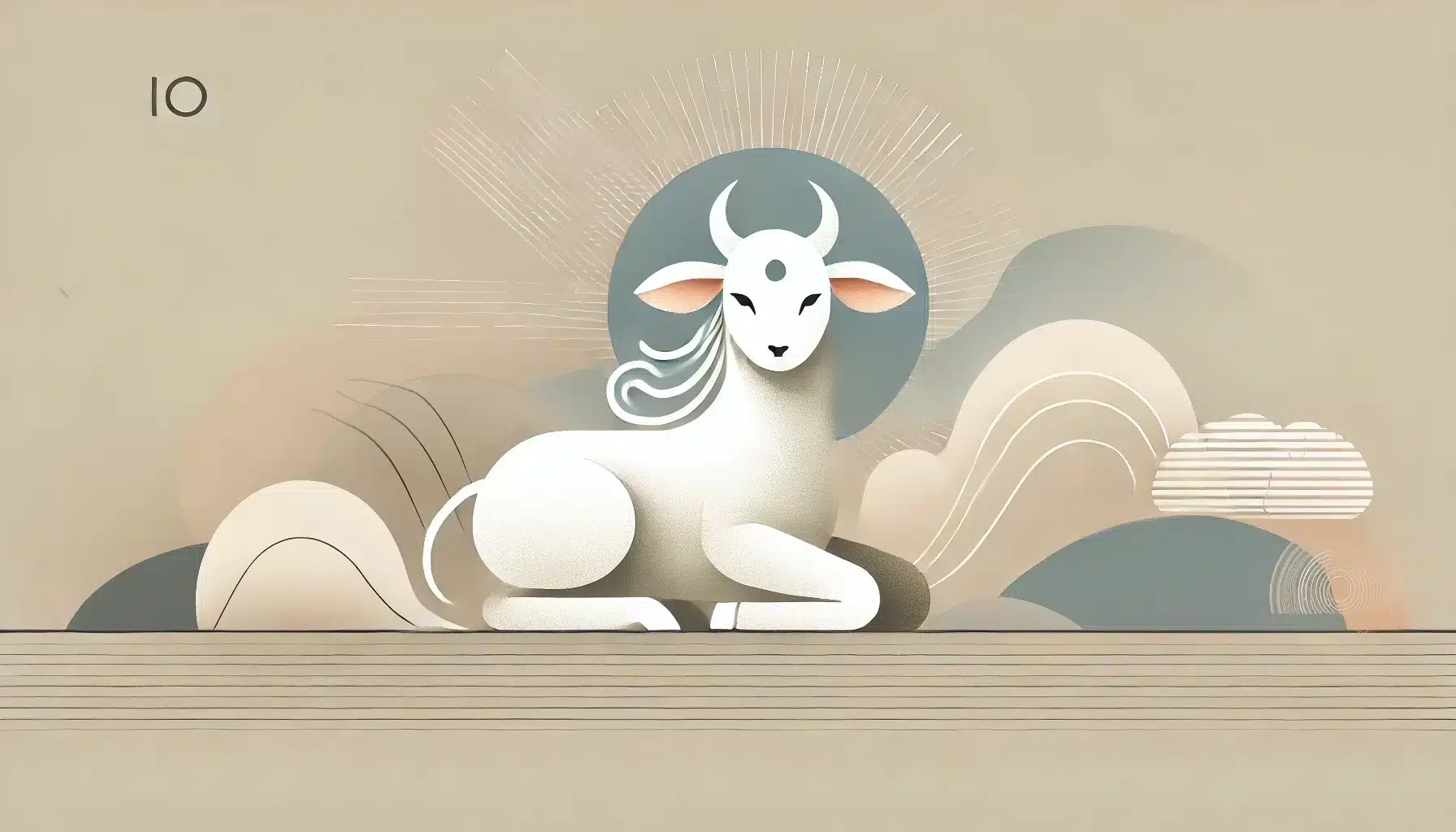
Io is a figure in Greek mythology known for her dramatic transformation and wanderings. She was a mortal woman loved by Zeus, the king of the gods. Her story is one of love, jealousy, and eventual redemption, reflecting the complex relationships among the Greek deities and mortals.
Name: Io
Role: Mortal loved by Zeus, mother of Epaphus
Mythology: Greek
Domain: Connected to transformation and wandering
Family: Daughter of Inachus (river god), mother of Epaphus
Origin and Background
Io was the daughter of Inachus, the river god, and a priestess of Hera. Her extraordinary beauty attracted Zeus, who fell deeply in love with her. Fearing Hera’s wrath, Zeus tried to hide the affair, but Hera, ever-watchful and suspicious, noticed his interest in Io.
To protect Io from Hera’s jealousy, Zeus transformed her into a white heifer. However, Hera was not fooled. She demanded the heifer as a gift, knowing that it was Io in disguise. Trapped by Hera’s cunning, Zeus had no choice but to agree.
Hera placed Io under the watchful guard of Argus Panoptes, a giant with a hundred eyes. Argus was tireless, as some of his eyes always remained open, even when the others were asleep.
Appearance and Symbols
In her transformed state, Io is depicted as a radiant white heifer, a symbol of purity and innocence. The heifer’s form symbolizes the loss of her humanity and her victimization by the gods.
Her mortal form is described as a beautiful young woman, often adorned with priestly attire reflecting her role as a servant of Hera before her tragic transformation. The gadfly sent by Hera to torment Io becomes an enduring symbol of her suffering, representing persistence and pain.
Additionally, places tied to her journey, such as the Ionian Sea, carry her legacy, symbolizing the vastness of her wandering and her endurance.
Powers and Abilities
Though Io is a mortal, her story reveals resilience and endurance that surpass ordinary human capabilities. Her transformation into a heifer strips her of her autonomy, yet she endures countless trials. Io’s strength lies not in divine power but in her ability to survive Hera’s relentless torment and navigate the challenges placed before her.
Personality and Traits
Io is portrayed as innocent and virtuous, caught in the crossfire of divine conflict. She embodies resilience and hope, maintaining her dignity even as she suffers. Her journey reflects themes of endurance and redemption, as she survives her ordeals and is ultimately restored to her human form.
Famous Myths
The central myth of Io begins with her transformation into a white heifer. Zeus, hoping to protect her, creates this disguise, but Hera claims Io for her own and places her under the constant watch of Argus Panoptes. Zeus, unwilling to abandon Io, sends Hermes to rescue her. Hermes cleverly lulls Argus to sleep with music and stories before killing him.
Hera, enraged by Argus’s death, sends a gadfly to torment Io. The insect relentlessly pursues her, driving her to wander across lands and seas. Her journey takes her through Greece, Thrace, and Asia Minor before she finally reaches Egypt. The Ionian Sea is named after Io, marking one of the many places associated with her travels.
During her wanderings, Io encounters Prometheus, who is bound to a rock as punishment from Zeus for stealing fire. Prometheus offers her comfort, predicting that her suffering will end in Egypt, where Zeus will restore her. He also foretells that one of her descendants, Heracles, will ultimately free him from his chains.
When Io finally reaches Egypt, Zeus transforms her back into a human. There, she gives birth to Epaphus, who becomes a ruler of Egypt and is linked to the bull god Apis. Her lineage continues through many generations, producing heroes like Perseus and Heracles, cementing Io’s significance in Greek mythology.
Worship and Legacy
Io herself was not worshipped as a deity, but her story is interwoven with the worship of Zeus and Hera. Her son, Epaphus, was revered in Egypt, where he was associated with the Apis bull. Io’s connection to Egypt reflects the blending of Greek and Egyptian cultural narratives, highlighting her importance as a bridge between the two traditions.
Io’s legacy lives on in art, literature, and geographical names. Classical paintings and sculptures often depict her transformation and suffering, emphasizing her purity and endurance. Writers like Aeschylus included her story in their works, ensuring its transmission across generations.
Modern interpretations of Io’s myth explore themes of victimhood, resilience, and transformation. Her journey can be seen as a metaphor for personal growth through adversity, resonating with audiences even today.
Conclusion
Io’s tale is one of transformation, resilience, and ultimate redemption. Her journey through suffering and hardship reflects the interplay of mortal and divine forces in Greek mythology. Despite being caught in the struggles of gods, Io emerges as a symbol of endurance and hope. Her story, though rooted in pain, ends with restoration and the promise of a heroic lineage. Io’s legacy continues to inspire, reminding us of the strength to persevere through life’s trials.
Read More:
Why do you keep falling for the same type?
Read the article Lovemaps: the hidden blueprint of our love.
Did you not find what you were looking for? Let me help you find more.
