
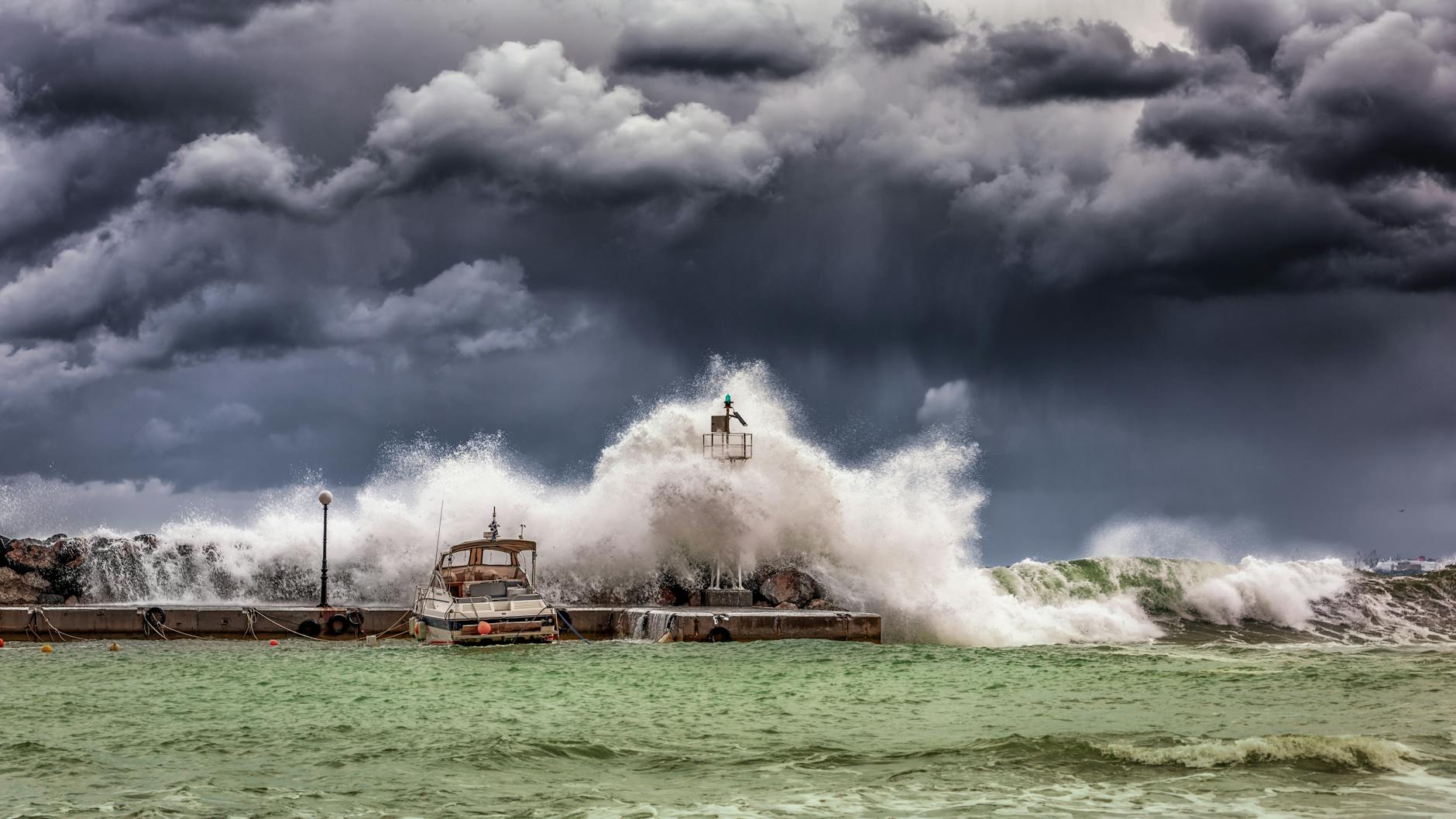
Why Clouds Matter: Everyday Impacts
Clouds play a crucial role in our daily lives, influencing weather patterns, climate, and human activities. They directly affect temperature and precipitation.
- Weather Forecasting: Meteorologists rely on cloud types to predict rain, storms, and clear skies. For example, the presence of cumulonimbus clouds often indicates thunderstorms.
- Agriculture: Farmers monitor cloud cover to determine irrigation needs. Understanding cloud patterns helps them plan planting and harvesting activities.
- Climate Regulation: Clouds help regulate Earth’s temperature by reflecting sunlight and trapping heat. This balance is essential for maintaining a stable climate.
How They Work: The Science Behind Clouds
The formation of clouds involves a delicate interplay of temperature, humidity, and atmospheric pressure. When warm air rises, it cools and loses its ability to hold moisture, leading to condensation.
- Condensation Nuclei: Tiny particles like dust or pollen serve as the foundation for water vapor to condense upon, forming droplets that create clouds.
- Types of Clouds: Different conditions lead to various types of clouds, each with distinct characteristics and weather implications.
Dew Point and Condensation
The dew point is the temperature at which air becomes saturated with moisture. When air cools to this point, clouds begin to form. For instance, if the dew point is 60°F and the air temperature drops below this threshold at night, fog may develop.
Diverse Types of Clouds: A Visual Guide
Clouds can be categorized into several types based on their appearance and altitude. Understanding these types helps us predict weather changes.
- Cumulus: Fluffy white clouds that often indicate fair weather.
- Stratus: Thick gray layers covering the sky, usually bringing light rain or drizzle.
- Cumulonimbus: Towering clouds associated with thunderstorms and severe weather.
- Cirrus: Thin, wispy clouds high in the atmosphere that can indicate an approaching storm.
How It Works: The Lifecycle of a Cloud
The lifecycle of a cloud begins with its formation and ends when it dissipates. This process involves several stages:
- Formation: As warm air rises and cools, moisture condenses around particles to form droplets.
- Maturity: A cloud grows as more moisture condenses, potentially leading to precipitation.
- Dissipation: When the surrounding air becomes too dry or the droplets fall as rain, the cloud breaks apart.
Debunking Misconceptions: Common Myths About Clouds
Misinformation about clouds can lead to misunderstandings about weather phenomena. Here are some common myths debunked:
- Myth 1: All clouds bring rain. Fact: Not all clouds produce precipitation; some may simply indicate changing weather.
- Myth 2: Dark clouds always mean thunderstorms. Fact: Dark clouds can also indicate overcast skies without storms.
- Myth 3: Clouds float because they are light. Fact: Clouds are made of tiny water droplets or ice crystals that remain suspended due to rising air currents.
The Role of Technology in Cloud Observation
Advancements in technology have significantly improved our understanding of clouds. Satellite imagery and remote sensing allow meteorologists to monitor cloud patterns globally.
- Sensors: High-tech sensors measure temperature, humidity, and atmospheric pressure to forecast weather accurately.
- Doppler Radar: This technology detects precipitation intensity and movement, providing real-time updates on storm systems.
The Future of Cloud Research and Climate Change
The study of clouds is vital in understanding climate change. As global temperatures rise, cloud patterns may shift, affecting weather systems worldwide.
- Affecting Weather Patterns: Changes in cloud cover can alter rainfall distribution and intensity, impacting ecosystems and water supplies.
- Climate Models: Researchers are integrating cloud dynamics into climate models to predict future climate scenarios more accurately.
The ongoing research into clouds will continue to enhance our understanding of their complex role in the Earth’s climate system and help us adapt to changing conditions.
Sources
- Cloud – Wikipedia
- en.wiktionary.org
- en.wiktionary.org
- en.wiktionary.org
- en.wiktionary.org
- www.erh.noaa.gov
- theconversation.com
- www.etymonline.com
- www.thefreedictionary.com
- cloudatlas.wmo.int
- ntrs.nasa.gov
Why do you keep falling for the same type?
Read the article Lovemaps: the hidden blueprint of our love.
Did you not find what you were looking for? Let me help you find more.
